Upcoming Events
Welcome to The Network Training Calendar!
All trainings are open to any CBO. We encourage you to select trainings that align with your capacity‑building plan and assessment, and to review the recommended staff roles and training summaries before registering. Space is limited, so CBOs are encouraged to register no more than two staff members per training unless otherwise advised by your Project Coordinator.
We look forward to supporting you!
How to Read & Understand Financial Statements
Please join us for How to Read & Understand Financial Statements facilitated by - Amy Kaufman
-
How to Read and Understand Financial Statements provides community-based organizations with the foundational knowledge needed to interpret and use financial information to support organizational decision-making and sustainability. Financial statements tell the story of an organization's financial health, helping leaders understand how resources are being managed, identify potential risks, and make informed strategic decisions. This training breaks down key financial reports into practical, easy-to-understand concepts and helps participants build confidence in reviewing and discussing financial information within the context of Community Violence Intervention (CVI) programs.
-
- Understanding the purpose of financial statements
- Introduction to the Statement of Financial Position (Balance Sheet)
- Understanding the Statement of Activities (Income Statement)
- Reviewing cash flow and organizational liquidity
- Interpreting revenues, expenses, assets, and liabilities
- Identifying indicators of financial health and sustainability
- Understanding restricted and unrestricted funding
- Reviewing common financial terms and concepts
- Using financial reports to support program and organizational decision-making
- Strengthening communication between program and finance staff
-
- Executive Directors
- Program Directors
- Program Managers
- Finance and Accounting Staff
- Operations Managers
- Grants Managers
- Board Members
- Administrative Staff involved in budgeting or reporting
Note that attendance is limited to 2 staff members per organization.
This training is recommended for staff responsible for overseeing finances, managing grants, reviewing organizational performance, making budget decisions, or supporting the financial sustainability of Community Violence Intervention programs.
How to Develop an Organizational Budget
Please join us for How to Develop an Organizational Budget facilitated by - Amy Kaufman
-
Developing an Organizational Budget focuses on creating and managing budgets that support organizational goals, program effectiveness, and long-term sustainability. Participants will learn the key components of budget development, including projecting revenues and expenses, aligning resources with strategic priorities, and planning for organizational growth. This training will provide practical tools and best practices to help Community Violence Intervention (CVI) organizations build realistic and effective budgets that support both daily operations and future planning.
-
- Understanding the purpose and value of organizational budgeting
- Aligning budgets with organizational goals and priorities
- Identifying revenue sources and funding considerations
- Forecasting program and operational expenses
- Building annual and project-based budgets
- Allocating resources across programs and departments
- Understanding direct and indirect costs
- Monitoring budget performance throughout the year
- Adjusting budgets in response to organizational changes
- Using budgets as a tool for planning, decision-making, and sustainability
-
- Executive Directors
- Program Directors
- Program Managers
- Finance and Accounting Staff
- Operations Managers
- Grants Managers
- Development and Fundraising Staff
- Administrative Staff responsible for financial planning
This is a virtual training - once you have RSVP’d, be on the lookout for a calendar invite containing the meeting link.
This training is recommended for staff responsible for developing, managing, monitoring, or approving organizational budgets and for those seeking to strengthen financial planning practices that support effective Community Violence Intervention programming and long-term organizational sustainability.
Follow Your Dollar: How Funding Really Moves Through Your Organization
Please join us for Follow Your Dollar: How Funding Really Moves Through Your Organization facilitated by - State of Mind Collective
-
Winning a grant is where the work begins. Every funding source comes with its own rules about what it can pay for, when the money arrives, what it takes to manage, and what happens when it ends. When leaders understand how their funding actually moves through their organization, they make stronger decisions about which new opportunities to pursue and which to pass on.
This hands on workshop is designed for CVI organizations at every stage. Participants will trace one of their own funding sources from award to operations, identify where their organization is strong and where it may be exposed, and use what they learn to assess whether future opportunities are the right fit for their mission and capacity.
Building on the Fundraising 101 foundation, this session meets participants wherever they are, whether they are new to the funding side of the work or have been managing grants for years.
-
A clear, practical look at how funding operates inside a CVI organization
A guided exercise tracing one of your own funding sources
A simple readiness check for evaluating new funding opportunities
Strategies for reducing reliance on a single funding source
Peer conversation with organizations doing similar work across the network
-
Executive Directors
CEOs
Program Directors
Finance and Accounting Staff
Grant Writers and Managers
Development and Fundraising Staff
Board Members involved in fundraising.
Note that attendance is limited to 2 staff members per organization.
This training is recommended for staff responsible for overseeing finances, managing grants, reviewing organizational performance, making budget decisions, or supporting the financial sustainability of Community Violence Intervention programs.
Building Funder Relationships
Please join us for Building Funder Relationships facilitated by - Urban Male Network
-
Building Funder Relationships focuses on developing the skills and strategies needed to cultivate meaningful, long-term partnerships with funders that support organizational growth and sustainability. Participants will learn how to move beyond transactional fundraising and build relationships rooted in trust, communication, transparency, and shared impact. Designed for Community-Based Organizations (CBOs) operating in the Community Violence Intervention (CVI) space, this training explores how to effectively engage prospective funders, strengthen stewardship practices, communicate organizational impact, and increase funder retention. Attendees will leave with practical tools for building lasting partnerships that advance both organizational goals and community outcomes.
-
Understanding the funder relationship lifecycle from prospecting to long-term partnership-
Moving beyond transactional fundraising to relationship-centered fundraising
Building trust, credibility, and authentic connections with funders
Preparing for funder meetings, introductions, and relationship-building conversations
Developing strategies to engage funders before requesting financial support
Strengthening stewardship practices through ongoing engagement and appreciation
Understanding funder priorities and aligning organizational goals with funding interests
Managing challenging conversations and maintaining relationships during funding gaps
Increasing funder retention and turning one-time supporters into long-term partners
Integrating funder relationship management into broader fundraising and sustainability strategies
-
Executive Directors
Chief Executive Officers (CEOs)
Program Directors
Program Managers
Finance and Accounting Staff
Grants Writers and Grants Managers
Development and Fundraising Staff
Administrative Staff involved in budgeting, reporting, or grant administration
Note that attendance is limited to 2 staff members per organization.
This training is recommended for staff responsible for overseeing finances, managing grants, reviewing organizational performance, making budget decisions, or supporting the financial sustainability of Community Violence Intervention programs.
What is Individual Giving and Donor Development
Please join us for What is Individual Giving and Donor Development facilitated by - Conlon Public Strategies
-
What Is Individual Giving & Donor Development introduces Community-Based Organizations (CBOs) to the fundamentals of building and sustaining support from individual donors. Participants will learn how individual giving can strengthen organizational sustainability, diversify revenue streams, and create a network of supporters invested in the organization's mission. Designed for organizations operating in the Community Violence Intervention (CVI) space, this training explores practical strategies for identifying prospective donors, building donor pipelines, engaging supporters, strengthening stewardship practices, and developing long-term relationships that encourage ongoing investment in violence prevention and community safety efforts. Attendees will leave with a greater understanding of how donor development supports both fundraising success and long-term organizational growth.
-
Understanding the role of individual giving within nonprofit fundraising
Exploring how individual donors contribute to organizational sustainability
Understanding the donor development lifecycle and relationship-building process
Building a donor pipeline and identifying prospective supporters
Leveraging existing networks, stakeholders, volunteers, and community partners
Creating donor engagement strategies that build trust and connectionUnderstanding ethical considerations when sharing participant and community stories
Strengthening donor stewardship through appreciation and ongoing communication
Building donor loyalty and increasing donor retention
Developing systems and processes that support sustainable individual giving programs
-
Executive Directors
Chief Executive Officers (CEOs)
Program Directors
Program Managers
Finance and Accounting Staff
Grants Writers and Grants Managers
Development and Fundraising Staff
Administrative Staff involved in budgeting, reporting, or grant administration
This is a virtual training - once you have RSVP’d, be on the lookout for a calendar invite containing the meeting link.
This training is recommended for staff responsible for overseeing finances, managing grants, reviewing organizational performance, making budget decisions, or supporting the financial sustainability of Community Violence Intervention programs.
One Idea, One Hour, 300 Words: Writing a letter to the editor that gets published
Please join us for One Idea, One Hour, 300 Words: Writing a letter to the editor that gets published - facilitated by Rudd Resources
-
One Idea, One Hour, 300 Words: Writing a Letter to the Editor That Gets Published helps participants develop compelling stories and persuasive messages that can influence public opinion and elevate community voices. Participants will learn how to transform ideas, experiences, and community concerns into concise and engaging letters that capture the attention of editors and readers. This training focuses on storytelling fundamentals, persuasive writing techniques, and practical strategies for increasing the likelihood of publication. Attendees will leave with the skills needed to effectively communicate issues impacting their communities and advocate for meaningful change through local media.
-
- Understanding the purpose and impact of letters to the editor
- Identifying topics that are timely, relevant, and compelling
- Learning the key elements of a captivating story
- Crafting clear and persuasive messages in a limited word count
- Incorporating data, personal experience, and community perspectives
- Writing attention-grabbing openings and memorable conclusions
- Adapting messages for different audiences and publications
- Common mistakes that prevent publication
- Editing and refining content for maximum impact
- Tips for submitting and following up with media outlets
-
- Executive Directors
- Communications and Public Relations Staff
- Community Engagement Coordinators and Managers
- Outreach and Intervention Staff
- Advocacy and Policy Staff
- Program Directors
- Development and Fundraising Staff
Note that attendance is limited to 2 staff members per organization.
This training is recommended for staff interested in strengthening their storytelling, public communication, and advocacy skills to raise awareness, influence public discourse, and highlight the impact of community violence intervention efforts.
How to Hold the Press Release and Get TV Courage
Please join us for How to Hold the Press Release & Get TV Coverage - facilitated by Rudd Resources
-
How to Hold the Press Release and Get TV Coverage focuses on helping community-based organizations gain media attention and effectively share their stories with the public. Participants will learn how to develop media advisories that capture the interest of television news outlets, promote events, and highlight the impact of their work. This training explores the fundamentals of media relations, how news organizations determine what is newsworthy, and strategies for building relationships with local media. Attendees will leave with practical tools to increase visibility for their organization and amplify community impact through earned media.
-
- Understanding the difference between a press release and a media advisory
- Identifying what makes a story newsworthy
- Writing effective media advisories for television and news outlets
- Developing key messages that resonate with reporters and audiences
- Timing and distribution strategies for media outreach
- Building relationships with local journalists and media contacts
- Preparing spokespersons for media interviews
- Coordinating media coverage for community events and initiatives
- Avoiding common media outreach mistakes
- Measuring the impact of media coverage and earned media opportunities
-
- Executive Directors
- Communications and Public Relations Staff
- Community Engagement Coordinators and Managers
- Program Directors
- Outreach Supervisors
- Director of Development
- Advocacy and Policy Staff
- Staff responsible for public-facing events and initiatives
Note that attendance is limited to 2 staff members per organization.
This training is recommended for staff responsible for promoting organizational initiatives, engaging the community, managing public communications, or increasing awareness of violence prevention and intervention efforts.
Trauma-Informed and Healing-Centered CVI Practices
Please join us for Trauma-Informed and Healing-Centered CVI Practices - facilitated by UCAN.
-
Trauma-Informed and Healing-Centered CVI Practice explores how trauma influences individuals, communities, and violence prevention efforts, while providing practical strategies for promoting healing, resilience, and recovery. This training helps participants understand the lasting impact of violence and trauma and introduces approaches that support healthier engagement with participants, families, and communities. Participants will learn how to apply trauma-informed principles, recognize the effects of secondary and vicarious trauma, and contribute to creating organizations that support both participant healing and staff well-being. Grounded in Community Violence Intervention (CVI) best practices, this training emphasizes strengths-based engagement, resilience, and long-term community wellness.
-
- Understanding trauma and its impact on violence and community outcomes
- Examining the relationship between trauma exposure and violence involvement
- Learning the principles of trauma-informed practice
- Exploring healing-centered engagement and strengths-based approaches
- Recognizing signs of secondary trauma and vicarious trauma
- Examining burnout and compassion fatigue among frontline staff
- Strengthening wellness, self-awareness, and reflective practice
- Building healthy boundaries and sustainable helping practices
- Exploring leadership's role in supporting staff well-being
- Understanding what makes an organization trauma-responsive
-
- Street Outreach Workers
- Violence Interrupters
- Case Managers
- Victim Advocates
- Promgram Managers/Supervisors
- Reentry Staff
- Program Directors
- Behavioral Health Staff
- Hospital-Based Violence Intervention Staff
Note: This training is recommended for staff who work directly with individuals impacted by violence and those responsible for supporting frontline practitioners. Participants will gain practical strategies for understanding trauma, promoting healing, supporting staff wellness, and building trauma-responsive organizations that foster long-term success for both participants and employees.
This is a virtual training - once you have RSVP’d, be on the lookout for a calendar invite containing the meeting link.
This training is recommended for staff who work directly with individuals impacted by violence and those responsible for supporting frontline practitioners. Participants will gain practical strategies for understanding trauma, promoting healing, supporting staff wellness, and building trauma-responsive organizations that foster long-term success for both participants and employees.
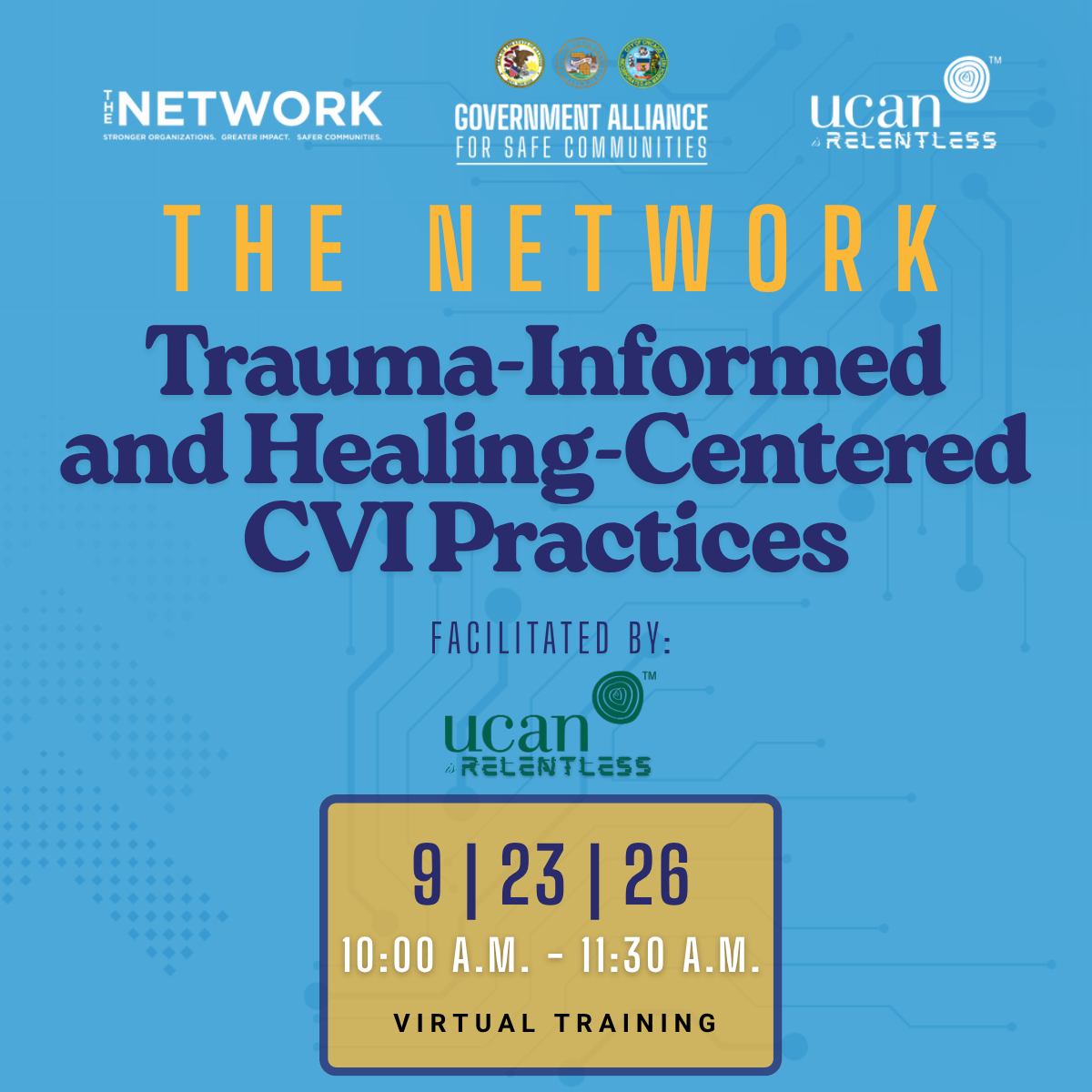
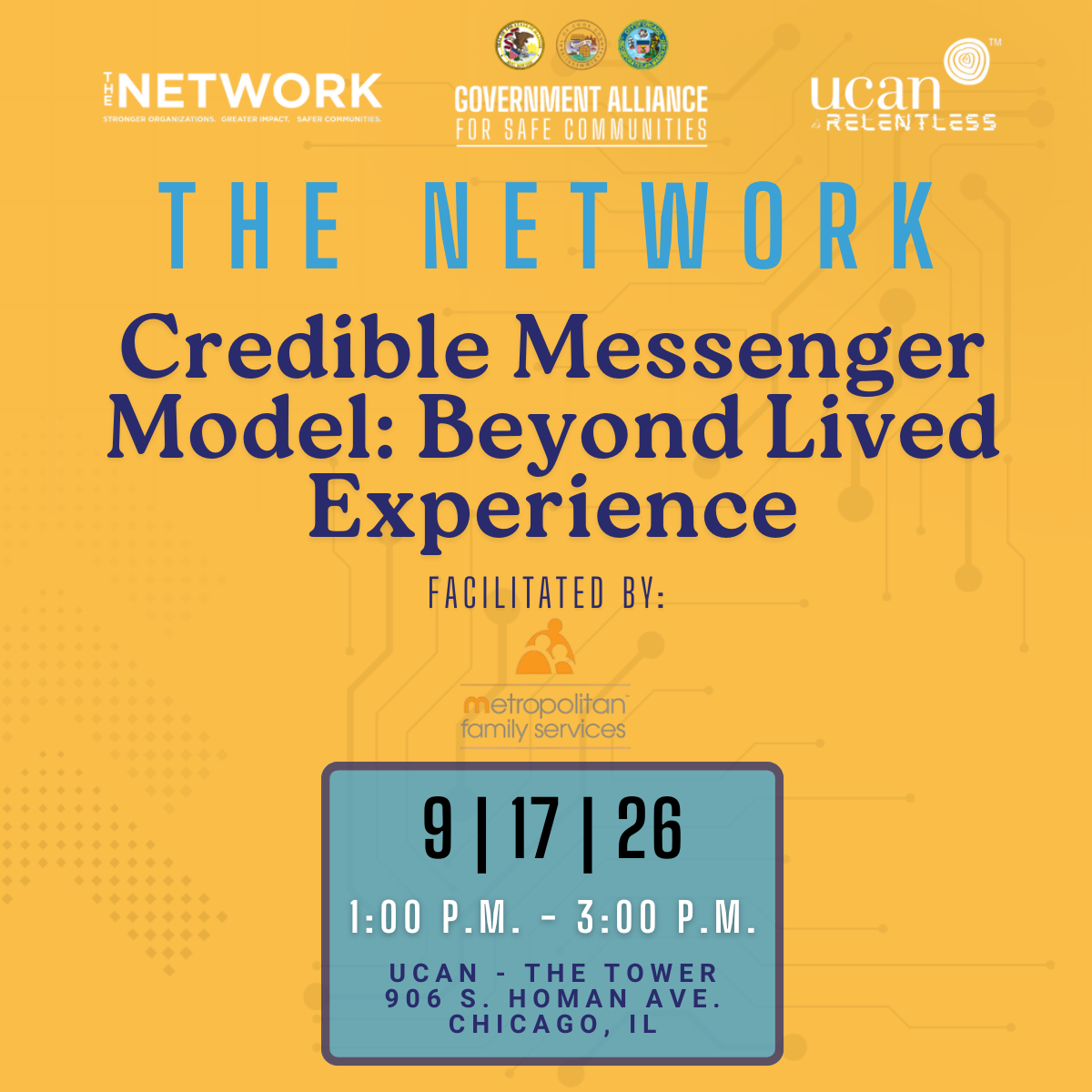
Credible Messenger Model: Beyond Lived Experience
THIS TRAINING IS CURRENTLY FULL.
Want to be the first to know when this training is offered again? Join the interest list below. We’ll save your information and notify you first when registration opens for the next training session.
Please join us for Credible Messenger Model: Beyond Lived Experience - facilitated by Metropolitan Family Services.
-
The Credible Messenger Model: Beyond Lived Experience training explores the role of Credible Messengers within Community Violence Intervention efforts and challenges the notion that lived experience alone is enough to be effective in the work. While lived experience can create opportunities for connection and trust, successful Credible Messengers must also demonstrate professionalism, accountability, ethical decision-making, and strong relationship-building skills. This training examines the qualities, behaviors, and support systems that help Credible Messengers effectively engage participants, navigate community and organizational expectations, and contribute to long-term violence prevention efforts. Participants will gain practical insights into maintaining credibility, establishing healthy boundaries, and strengthening their impact within both the community and the organizations they serve.
Participants will learn strategies for building trust, strengthening engagement, and connecting individuals to appropriate interventions and supports. Grounded in Community Violence Intervention (CVI) best practices, this training emphasizes relationship-based, trauma-informed approaches that help organizations effectively serve those most impacted by violence.
-
- Understanding the Credible Messenger Model and its role in Community Violence Intervention
- Identifying the characteristics and behaviors that make Credible Messengers successful
- Building trust, credibility, and authentic relationships with participants
- Understanding influence, mentorship, and positive role modeling
- Navigating the balance between community credibility and organizational responsibilities
- Establishing healthy professional boundaries
- Understanding confidentiality, ethics, and professional conduct
- Exploring common challenges faced by Credible Messengers in the field
- Understanding the importance of supervision, coaching, and staff support
- Preventing burnout and promoting sustainability in frontline work
- Developing leadership skills and increasing long-term effectiveness in the CVI field
-
- Street Outreach Workers
- Violence Interrupters/Peace Keepers
- Victim Advocates
- Program Managers and Supervisors
- Program Directors
- Reentry Staff
- Organizational Leadership
Note: This training is recommended for staff who work directly with participants impacted by community violence, support violence prevention efforts, or supervise frontline practitioners. Participants will gain a deeper understanding of what makes Credible Messengers effective beyond lived experience and learn strategies for maintaining credibility, professionalism, ethical practice, and long-term success in Community Violence Intervention work.
Note that attendance is limited to 2 staff members per organization.
This training is recommended for staff who work directly with participants impacted by community violence, support violence prevention efforts, or supervise frontline practitioners. Participants will gain a deeper understanding of what makes Credible Messengers effective beyond lived experience and learn strategies for maintaining credibility, professionalism, ethical practice, and long-term success in Community Violence Intervention work.
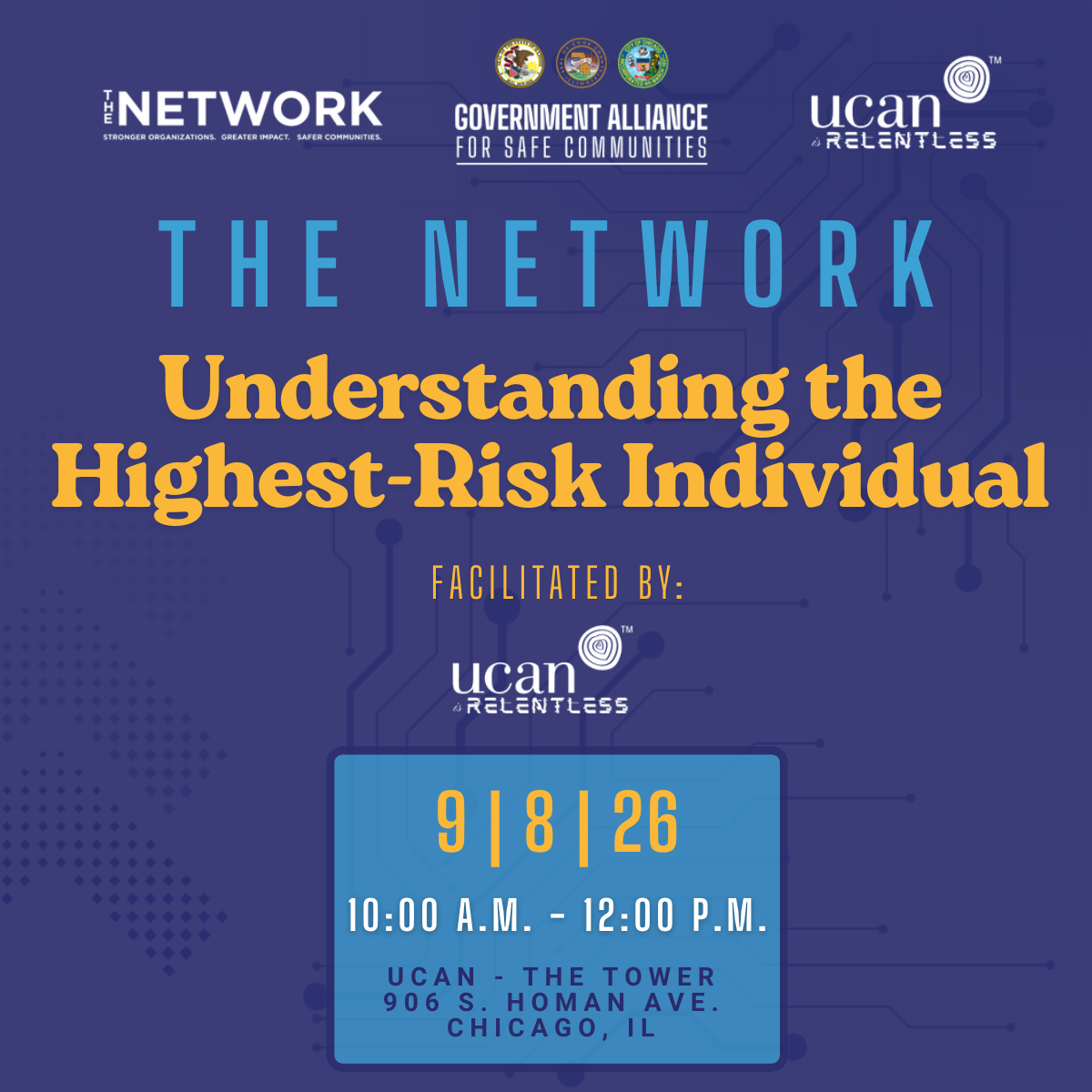
Understanding the Highest-Risk Individual
THIS TRAINING IS CURRENTLY FULL.
Want to be the first to know when this training is offered again? Join the interest list below. We’ll save your information and notify you first when registration opens for the next training session.
Please join us for Understanding the Highest-Risk Individual - facilitated by UCAN.
-
Understanding the Highest-Risk Individual explores the characteristics, circumstances, and factors that place certain individuals at the greatest risk of experiencing or perpetrating community violence. This training provides participants with a practical framework for identifying high-risk individuals, distinguishing between high-risk and high-need populations, and understanding how trauma, environment, and life experiences influence violence involvement.
Participants will learn strategies for building trust, strengthening engagement, and connecting individuals to appropriate interventions and supports. Grounded in Community Violence Intervention (CVI) best practices, this training emphasizes relationship-based, trauma-informed approaches that help organizations effectively serve those most impacted by violence.
-
- Exploring the factors that contribute to elevated risk for violence involvement
- Understanding the difference between high-risk and high-need individuals
- Examining the impact of trauma, victimization, and adverse life experiences
- Identifying common indicators associated with violence involvement
- Strengthening outreach, engagement, and relationship-building strategies
- Understanding how to connect participants to appropriate services, resources, and support systems
- Applying evidence-informed and relationship-based practices to CVI work
-
- Street Outreach Workers
- Violence Interrupters
- Case Managers
- Victim Advocates
- Program Managers/Supervisors
- Reentry Staff
- Program Directors
- Behavioral Health Staff
- Hospital-Based Violence Intervention Staff
Note: This training is recommended for staff who work directly with individuals impacted by community violence and those responsible for participant engagement, intervention planning, outreach, case management, mentoring, and violence prevention services. Participants will gain a deeper understanding of the complex factors that place individuals at elevated risk of violence involvement and learn practical strategies for building trust, assessing needs, and connecting participants to meaningful supports and opportunities.
Note that attendance is limited to 2 staff members per organization.
This training is recommended for staff who work directly with individuals impacted by community violence and those responsible for participant engagement, intervention planning, outreach, case management, mentoring, and violence prevention services. Participants will gain a deeper understanding of the complex factors that place individuals at elevated risk of violence involvement and learn practical strategies for building trust, assessing needs, and connecting participants to meaningful supports and opportunities.
Community Violence as a Public Health Approach
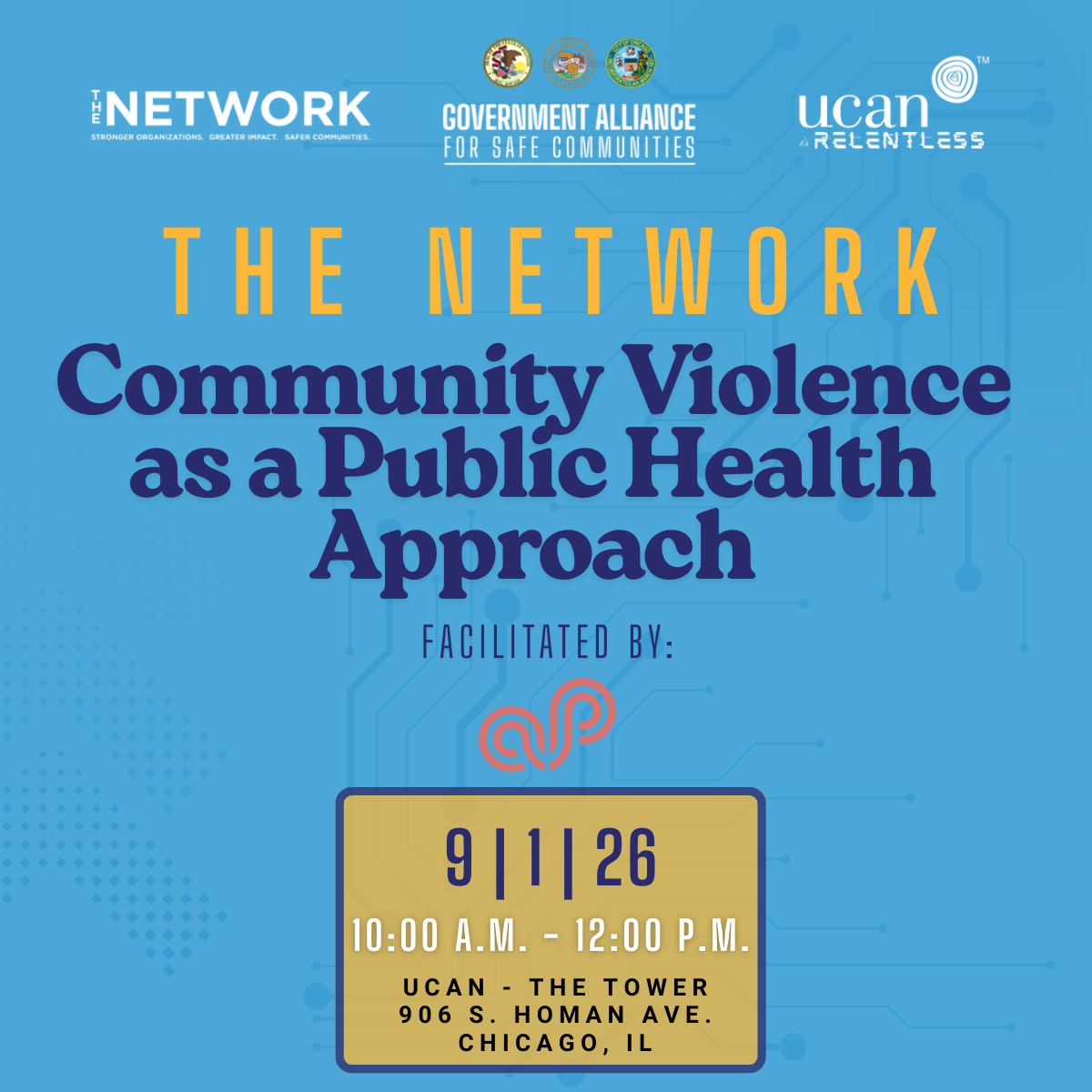
Please join us for Community Violence as a Public Health Approach - facilitated by Ashley Perkins.
-
Community Violence as a Public Health Issue explores violence through a public health lens, emphasizing prevention, intervention, and long-term community well-being. Rather than viewing violence solely as a criminal justice issue, this training examines the underlying factors that contribute to violence and the evidence-based strategies used to address it at the individual, community, and systems levels. Participants will gain an understanding of how public health frameworks, prevention science, social determinants, and community resilience can inform and strengthen Community Violence Intervention (CVI) efforts. The training will also highlight the role of collaborative, systems-level approaches in creating safer, healthier, and more equitable communities.
-
- Understanding community violence as a public health issue
- Exploring the public health framework and its application to violence prevention
- Introduction to prevention science and evidence-based approaches
- Examining the social determinants that contribute to violence and community outcomes
- Understanding the relationship between health inequities, trauma, and violence
- Identifying risk and protective factors that influence violence prevention efforts
- Building community resilience and strengthening protective community assets
- Exploring systems-level interventions that address the root causes of violence
- Understanding the role of cross-sector collaboration in violence prevention
- Applying public health principles to Community Violence Intervention strategies and programs
-
- Executive Directors
- CEOs
- Program Directors
- Program Managers and Coordinators
- Outreach Staff
- Case Managers
- Research, Data, and Evaluation Staff
- Policy and Advocacy Staff
- Funders and Community Partners
Note: This training is recommended for staff and stakeholders seeking to deepen their understanding of the root causes of community violence and how public health approaches can inform prevention, intervention, policy, and systems-change efforts that promote safer and healthier communities.
Note that attendance is limited to 2 staff members per organization.
This training is recommended for staff and stakeholders seeking to deepen their understanding of the root causes of community violence and how public health approaches can inform prevention, intervention, policy, and systems-change efforts that promote safer and healthier communities.
Managing for Impact: Practical Program Management in CVI
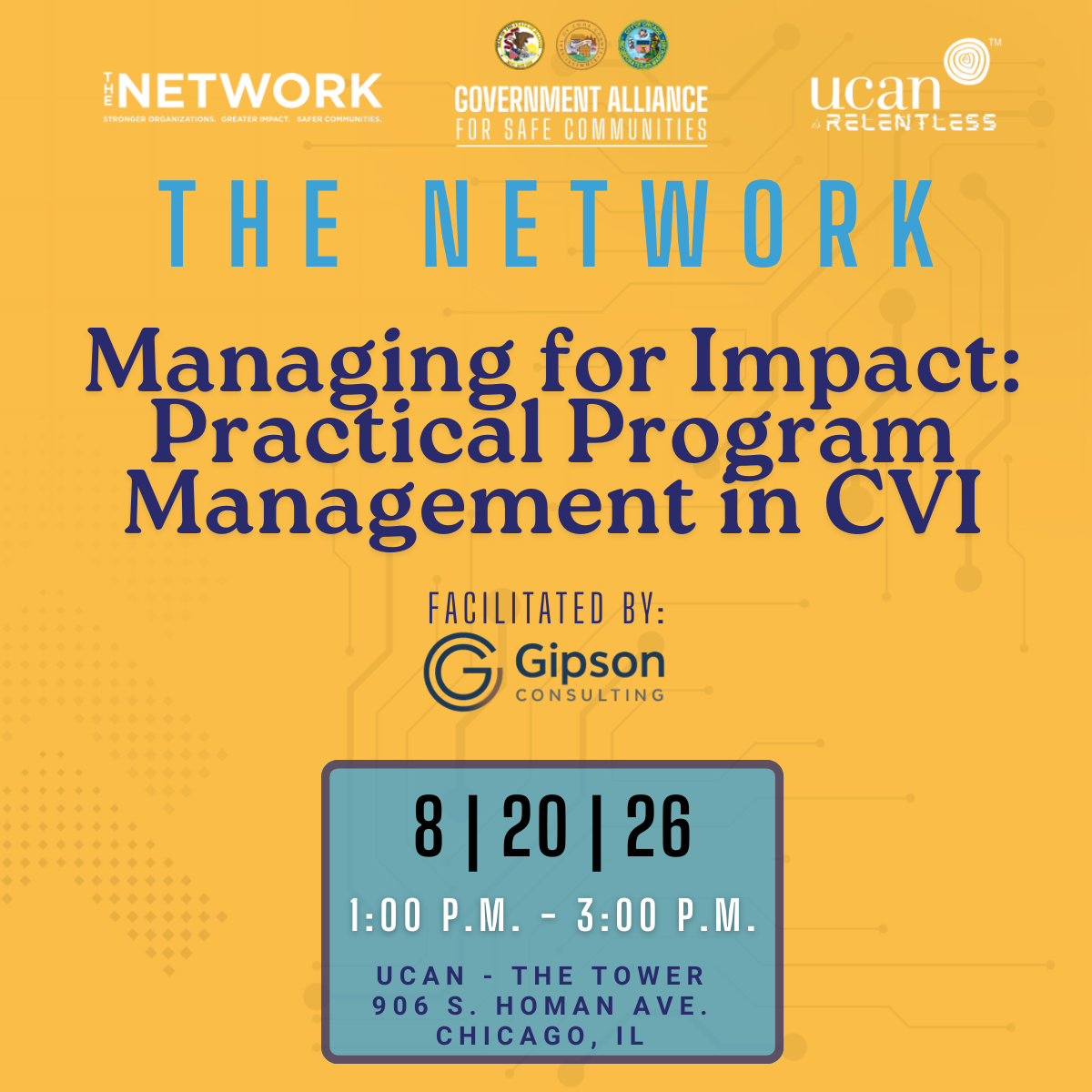
Please join us for Managing for Impact: Practical Program Management in CVI - facilitated by Gipson Consulting.
-
Program Management in the CVI Space focuses on the systems, processes, and leadership practices necessary to effectively plan, implement, monitor, and sustain community violence intervention programs. Strong program management helps organizations deliver high-quality services, achieve desired outcomes, maintain compliance with funder requirements, and adapt to the evolving needs of communities. This training explores key program management concepts including planning, staffing, performance monitoring, resource management, and continuous improvement. Participants will gain practical tools to strengthen program operations and enhance the effectiveness of violence prevention and intervention initiatives.
-
- Understanding the role of program management in Community Violence Intervention
- Developing program goals, objectives, and measurable outcomes
- Planning and coordinating program activities and services
- Managing staff roles, responsibilities, and performance
- Monitoring program implementation and quality assurance
- Using data and performance metrics to evaluate effectiveness
- Managing resources, timelines, and program deliverables
- Identifying and addressing operational challenges and risks
- Strengthening accountability, compliance, and reporting practices
- Implementing continuous improvement strategies to enhance program impact
-
- Executive Directors
- Chief Executive Officers (CEOs)
- Program Directors
- Program Managers and Coordinators
- Community Violence Intervention Managers
- Outreach Supervisors
- Case Management Supervisors
- Operations Managers
- Quality Assurance and Compliance Staff
- Administrative Staff supporting program operations
Note: This training is recommended for staff responsible for overseeing, coordinating, implementing, monitoring, or supporting program operations and performance within community violence intervention and violence prevention initiatives.
Note that attendance is limited to 2 staff members per organization.
This training is recommended for staff responsible for overseeing, coordinating, implementing, monitoring, or supporting program operations and performance within community violence intervention and violence prevention initiatives.
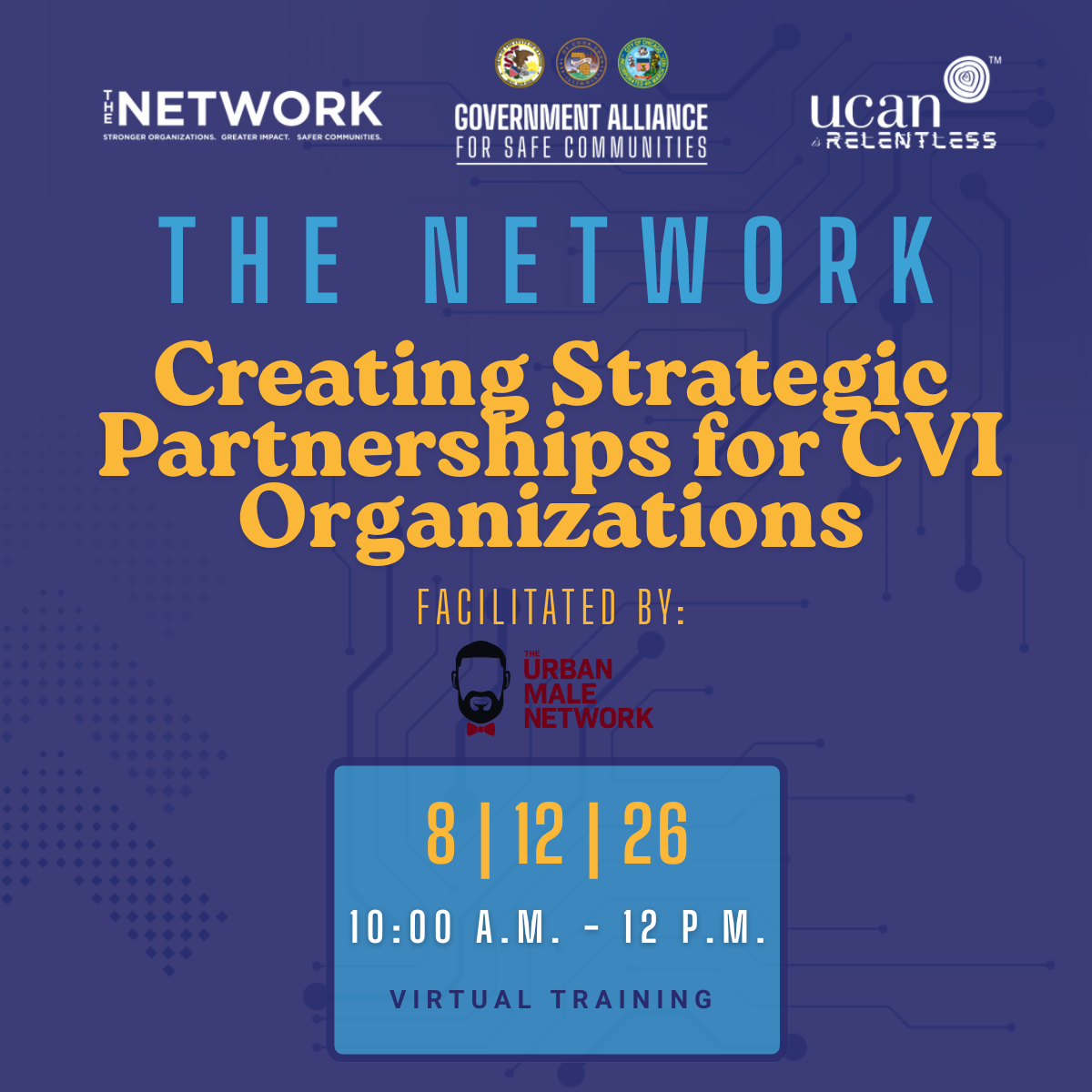
Creating Strategic Partnerships for CVI Organizations
Please join us for Creating Strategic Partnerships for CVI Organizations - facilitated by The Urban Male Network.
-
Partnership Development in the CVI Space focuses on building and strengthening the relationships necessary to support effective community violence intervention efforts. Strong partnerships help organizations expand their reach, improve service coordination, leverage resources, and create more comprehensive support systems for individuals and communities impacted by violence. This training explores strategies for identifying, developing, and sustaining meaningful partnerships with community organizations, government agencies, schools, healthcare providers, funders, and other key stakeholders. Participants will learn how to cultivate collaborative relationships that advance organizational goals and strengthen community impact.
-
- Understanding the role of partnerships in Community Violence Intervention
- Identifying potential partners that align with organizational goals and community needs
- Building trust and credibility with community stakeholders
- Developing mutually beneficial partnerships and collaborations
- Effective communication and relationship-building strategies
- Creating partnership agreements, roles, and shared expectations
- Leveraging partnerships to increase resources, referrals, and service delivery
- Coordinating services across organizations to improve participant outcomes
- Navigating challenges and conflict within partnerships
- Measuring and sustaining successful partnerships over time
-
- Executive Directors
- Chief Executive Officers (CEOs)
- Program Directors
- Community Violence Intervention Managers
- Outreach Supervisors
- Community Engagement Coordinators and Managers
- Partnership and Collaboration Leads
- Resource Navigators
- Development and Fundraising Staff
- Board Members
Note: This training is recommended for staff responsible for building external relationships, coordinating services, expanding community partnerships, securing resources, or strengthening collaborative efforts that support violence prevention and intervention initiatives.
Note: This is a virtual training - once you have RSVP’d, be on the lookout for a calendar invite containing the meeting link.
This training is recommended for staff responsible for building external relationships, coordinating services, expanding community partnerships, securing resources, or strengthening collaborative efforts that support violence prevention and intervention initiatives.
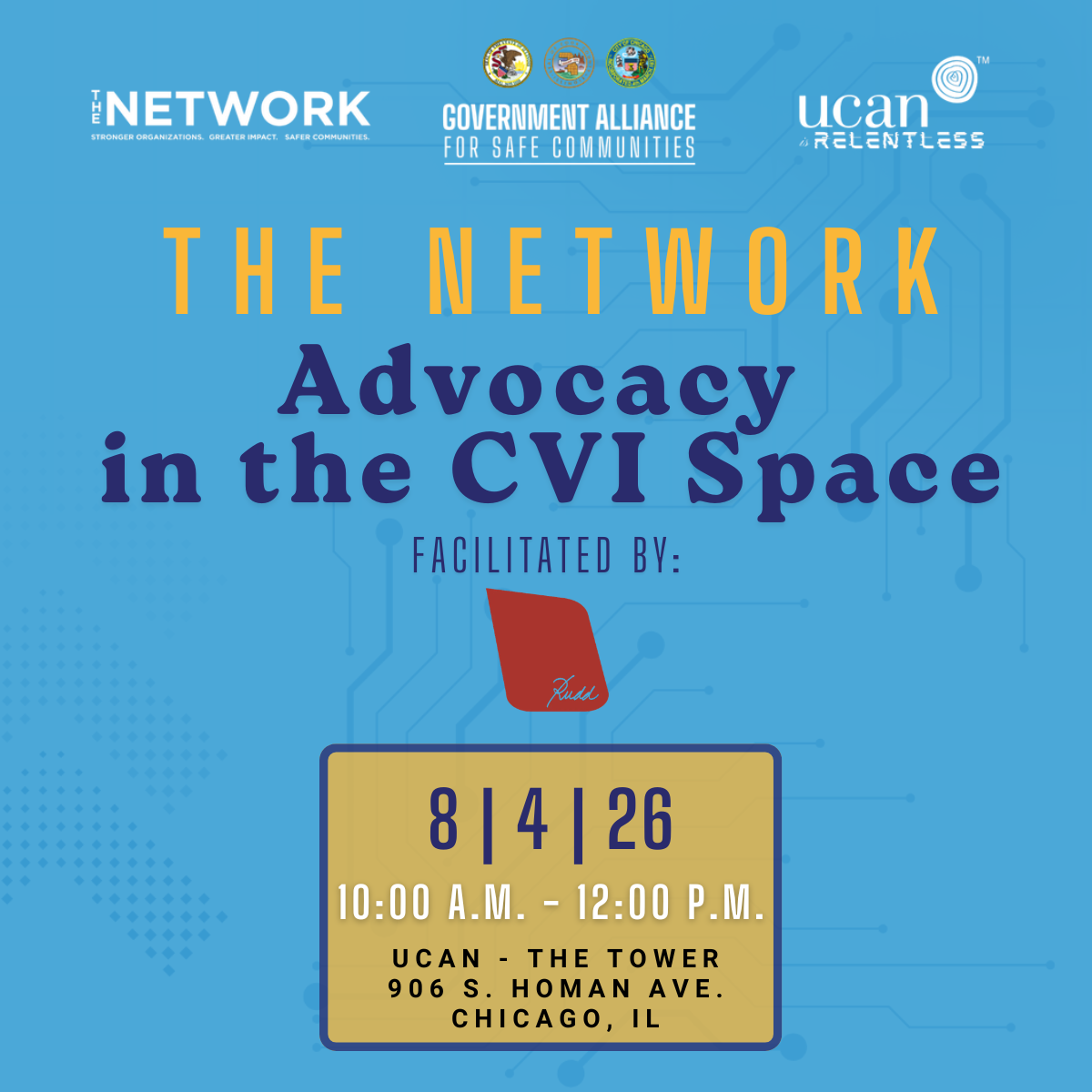
Advocacy in the CVI Space
Please join us for Advocacy in the CVI Space - facilitated by Rudd Resources.
-
Advocacy plays a critical role in advancing the mission and impact of Community Violence Intervention (CVI) organizations. This training will provide participants with a practical understanding of how to effectively advocate for policies, resources, and community-centered solutions that support violence prevention efforts. Attendees will explore strategies for engaging stakeholders, building relationships with decision-makers, leveraging data and lived experience to influence change, and mobilizing community voices in support of safer and healthier communities. Participants will leave with actionable tools to strengthen their organization's advocacy efforts while remaining aligned with applicable legal and organizational guidelines.
-
- Understanding advocacy and its role in Community Violence Intervention
- Differences between advocacy, public education, and lobbying
- Identifying issues and policy priorities that impact CVI work
- Building relationships with elected officials, public agencies, and community leaders
- Using data, success stories, and lived experiences to support advocacy efforts
- Developing effective advocacy messages and communication strategies
- Engaging community members and stakeholders in advocacy campaigns
- Building coalitions and partnerships to advance shared goals
- Advocating for sustainable funding and support for violence prevention initiatives
- Creating an advocacy action plan to support organizational and community objectives
-
- Executive Directors
- Chief Executive Officers (CEOs)
- Program Directors
- Community Violence Intervention Managers
- Outreach and Intervention Supervisors
- Community Engagement Coordinators and Managers
- Communications and Public Relations Staff
- Policy and Advocacy Staff
- Development and Fundraising Staff
- Board Members
Note: This training is recommended for staff responsible for representing the organization, engaging stakeholders, influencing policy, securing resources, or advancing community-driven solutions that support violence prevention and intervention efforts.
Note that attendance is limited to 2 staff members per organization.
This training is recommended for staff responsible for representing the organization, engaging stakeholders, influencing policy, securing resources, or advancing community-driven solutions that support violence prevention and intervention efforts.
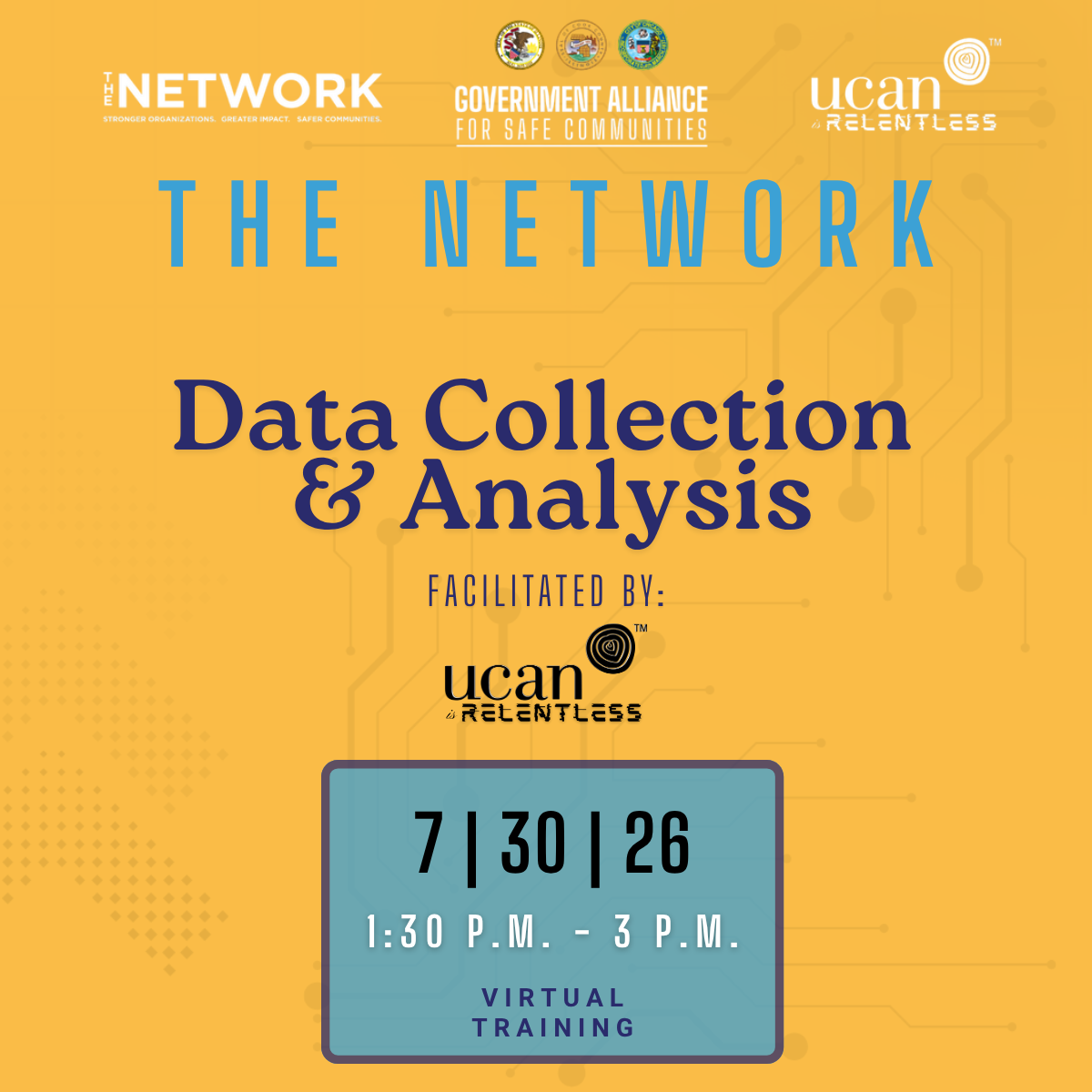
Data Collection & Analysis
Please join us for Data Collection & Analysis - facilitated by UCAN.
-
Data Collection & Analysis in the CVI Space focuses on building the skills and systems needed to accurately capture, manage, and use data to inform community violence intervention efforts. This training highlights the importance of data in demonstrating impact, improving program effectiveness, and guiding decision‑making. Participants will learn best practices for data collection, documentation, and basic analysis, with an emphasis on maintaining data integrity while working in fast‑paced, community‑based environments.
-
- The role of data in community violence intervention and program evaluation
- Best practices for accurate and consistent data collection
- Understanding key data points (participant engagement, incidents, outcomes)
- Documentation standards and maintaining data integrity
- Using data systems and tools effectively
- Identifying trends and patterns in community violence
- Translating data into actionable insights for program improvement
- Balancing data responsibilities with fieldwork demands
- Confidentiality, ethics, and responsible data use
- Communicating data to stakeholders, funders, and partners
-
- Data Coordinators and Analysts
- Program Managers and Coordinators
- Outreach Supervisors
- Case Managers responsible for documentation
- CVI Program Directors
- Administrative staff supporting reporting and compliance
Note: This training is recommended for staff responsible for collecting, managing, or using data to support program operations, reporting, and continuous improvement in CVI initiatives.
Note: This is a virtual training - once you have RSVP’d, be on the lookout for a calendar invite containing the meeting link.
This training is recommended for staff responsible for collecting, managing, or using data to support program operations, reporting, and continuous improvement in CVI initiatives.
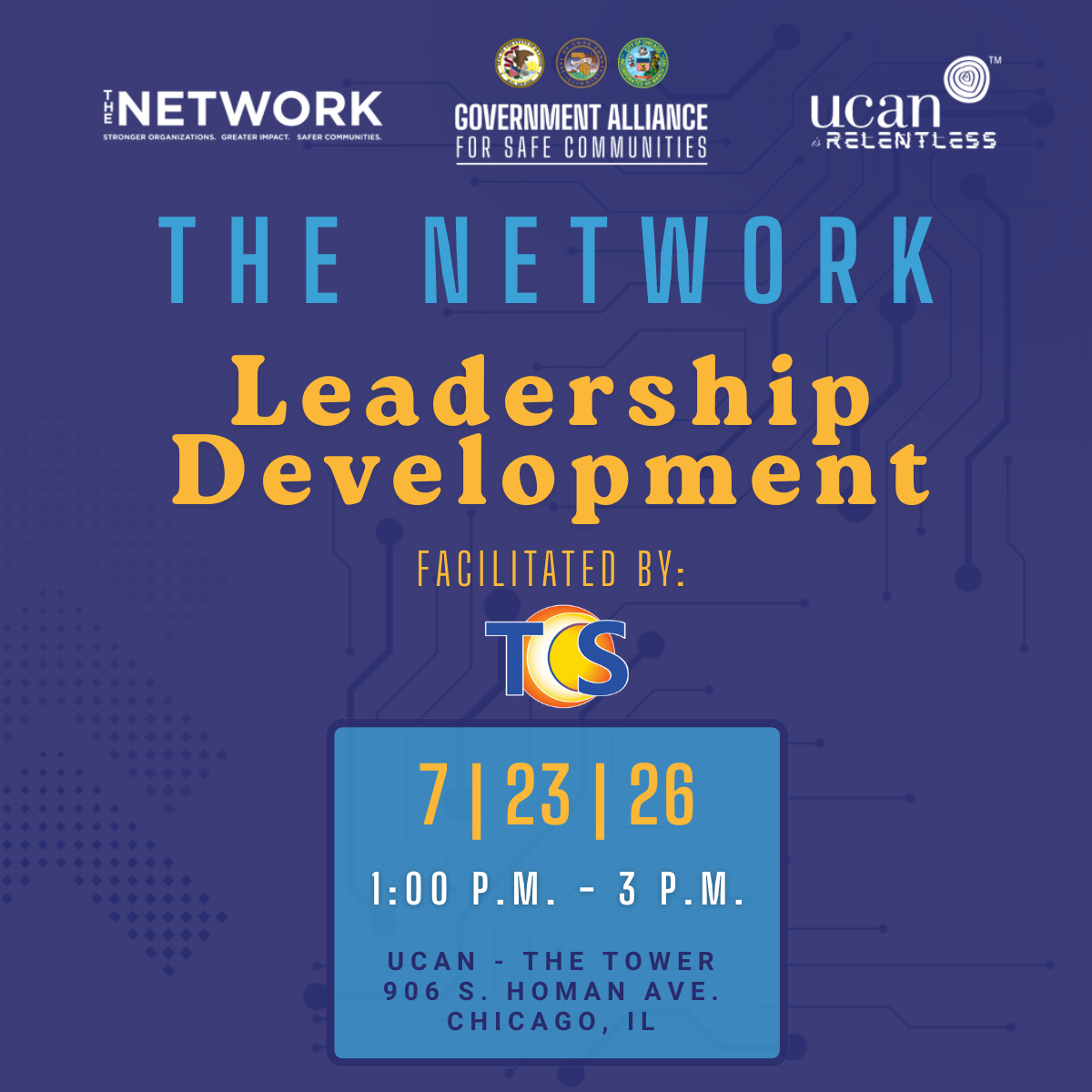
Leadership Development
Please join us for Leadership Development - facilitated by Trajectory Changing Solutions.
-
Leadership Development in the CVI Space focuses on building the knowledge, skills, and mindset necessary to lead effectively in high‑impact, community‑based violence intervention work. This training emphasizes the role of leadership in shaping team culture, supporting frontline staff, and driving program outcomes. Participants will explore leadership styles, communication strategies, decision‑making practices, and approaches to accountability that are critical in the CVI field. The session is grounded in real‑world challenges and highlights how strong leadership contributes to staff retention, program consistency, and community trust.
-
- Core leadership principles tailored to the CVI field
- Understanding leadership roles and responsibilities at different levels
- Developing self‑awareness and leadership style
- Effective communication strategies for teams and community partners
- Building and maintaining team culture and trust
- Supporting and supervising frontline staff in high‑stress environments
- Conflict resolution and managing team dynamics
- Decision‑making and accountability in complex situations
- Coaching, mentoring, and developing emerging leaders
- Leading with consistency, integrity, and community focus
-
- Outreach Supervisors and Team Leads
- Program Managers and Coordinators
- CVI Program Directors
- Case Management Supervisors
- Emerging Leaders preparing for supervisory roles
- Experienced staff transitioning into leadership positions
Note: This training is recommended for both current and aspiring leaders looking to strengthen their leadership capacity and better support teams within the CVI space.
Note that attendance is limited to 2 staff members per organization.
This training is recommended for both current and aspiring leaders looking to strengthen their leadership capacity and better support teams within the CVI space.
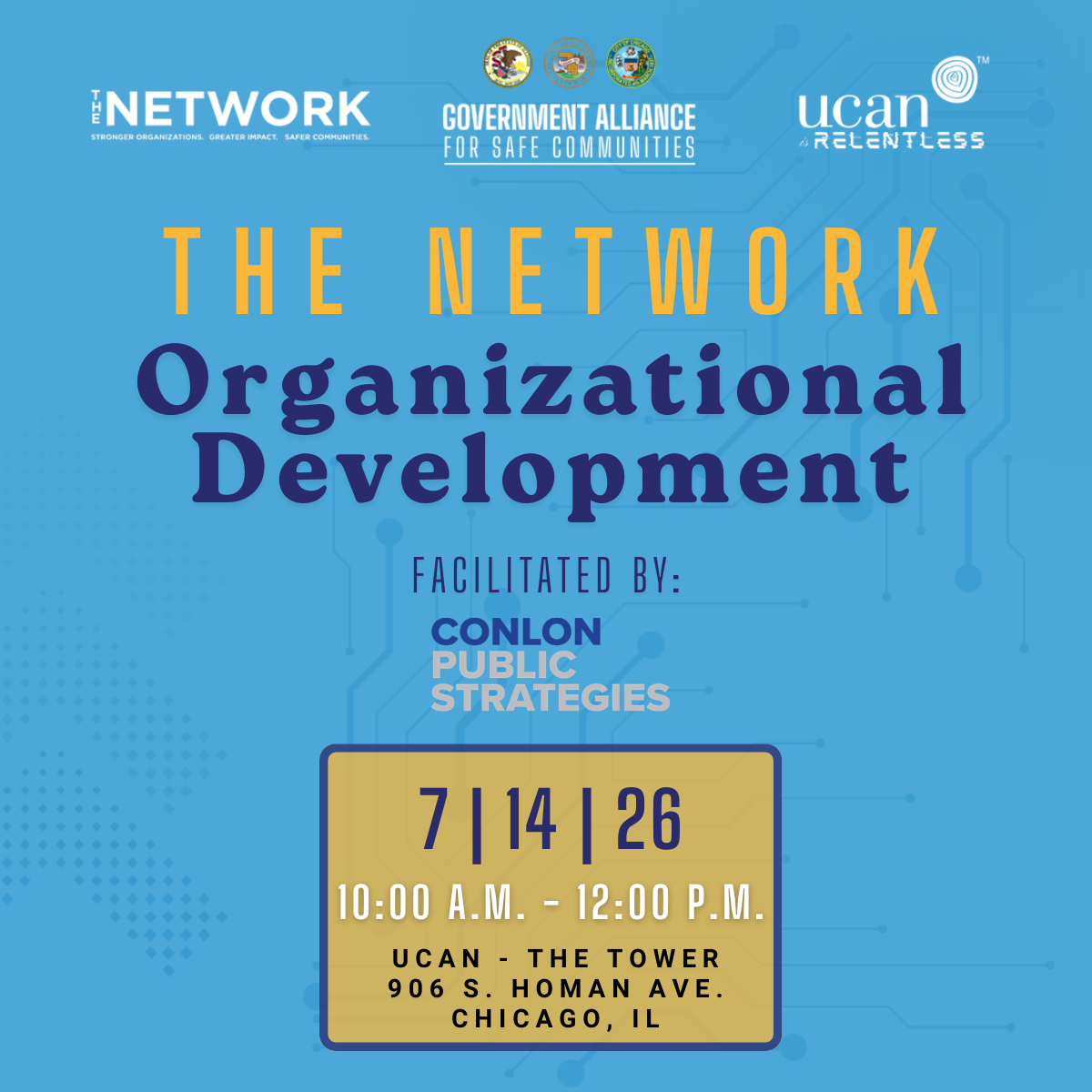
Organizational Development
Please join us for Organizational Development - facilitated by Conlon Public Strategies.
-
Organizational Development in the CVI Space focuses on strengthening the internal systems, structures, and leadership practices that support effective community violence intervention efforts. This training explores how CVI organizations can build sustainable, high‑functioning teams while maintaining alignment with their mission and community needs. Participants will examine key components of organizational health including leadership development, staff support, communication systems, and operational consistency, with an emphasis on creating environments where frontline staff can succeed and programs can scale with impact.
-
- Core principles of organizational development within the CVI field
- Aligning mission, vision, and day‑to‑day operations
- Defining clear roles, responsibilities, and organizational structure
- Building strong communication systems across teams and leadership levels
- Supporting frontline staff in high‑stress, high‑impact environments
- Developing leadership pathways and promoting internal growth
- Strengthening accountability, supervision, and performance management practices
- Improving data tracking, documentation, and program consistency
- Strategies for sustainability, capacity building, and organizational growth
- Collaborative approaches to working with community partners and stakeholders
-
- Outreach Supervisors and Team Leads
- Program Managers and Coordinators
- CVI Program Directors
- Case Management Supervisors
- Organizational Leadership and Administrative Staff
- Emerging Leaders within CVI organizations
Note: This training is beneficial for both new and established CVI organizations looking to strengthen internal systems and improve overall program effectiveness.
Note that attendance is limited to 2 staff members per organization.
This training is beneficial for both new and established CVI organizations looking to strengthen internal systems and improve overall program effectiveness.
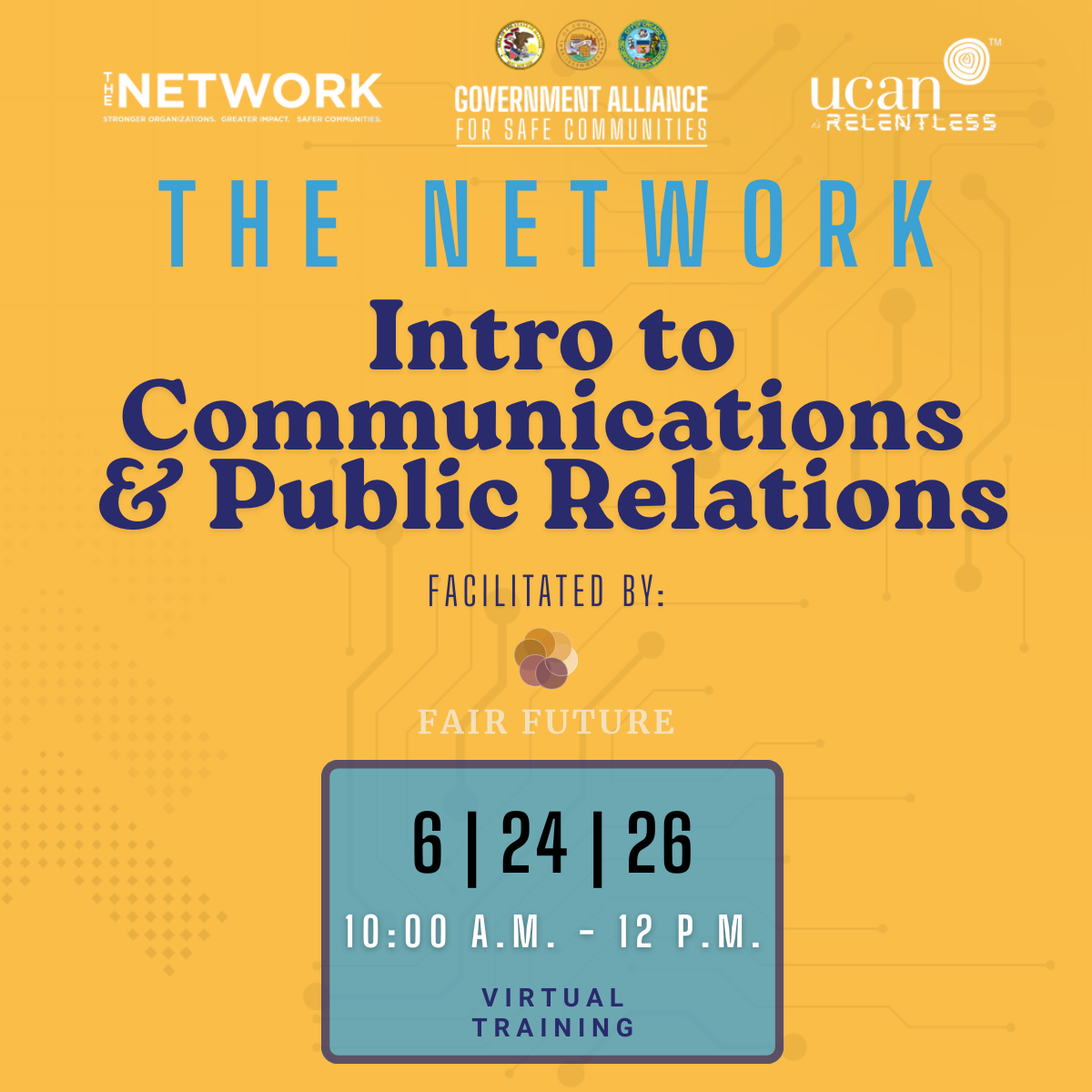
Intro to Communications & Public Relations
Please join us for Intro to Communications & Public Relations - facilitated by Fair Future.
-
Introduction to Communications & Public Relations provides Community‑Based Organizations (CBOs) in the CVI space with a foundational understanding of how to communicate clearly, responsibly, and strategically. This training introduces the core concepts of communications and public relations (CPR), explains why they matter, and explores how effective messaging supports community trust, safety, funding, and organizational credibility.
-
- What communications and public relations are and how they differ from marketing
- Internal vs. external communications and why both matter
- Identifying audiences, purpose, and key messages
- Ethical and safe storytelling in the CVI space
- Consent, confidentiality, and risk considerations
- Overview of common communication tools (social media, email, public speaking, websites)
- Intro‑level guidance on working with media and external visibility
- How communications support fundraising, partnerships, and sustainability
-
- Executive Directors / CEOs
- Program Directors and Program Managers
- Communications, outreach, or community engagement staff
- Development or fundraising staff
- Staff who speak publicly or engage with partners or media
- Supervisors supporting frontline or community‑facing staff
Note that attendance is limited to 2 staff members per organization.
This is a virtual training - once you have RSVP’d, be on the lookout for a calendar invite containing the meeting link.
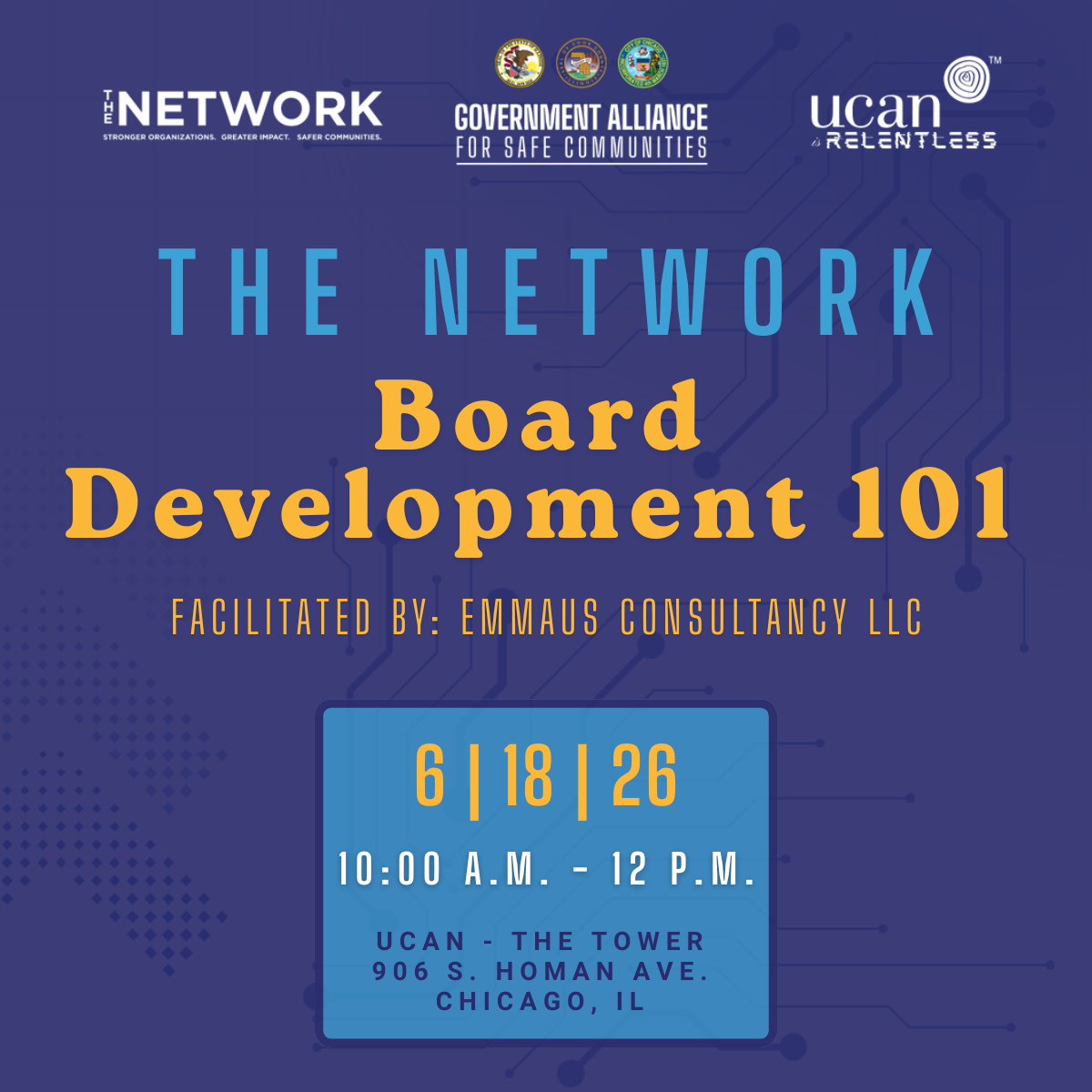
Board Development 101
Please join us for Board Development 101 - facilitated by Emmaus Consultancy LLC.
-
Board Development 101 provides an introduction to building and strengthening effective nonprofit boards serving Community‑Based Organizations (CBOs) in the CVI space. This training focuses on the purpose of nonprofit boards, core roles and responsibilities, and how to recruit, engage, and support board members who can meaningfully contribute to organizational success. Participants will gain practical guidance on establishing healthy board–staff relationships, building diverse and mission‑aligned boards, and understanding how strong governance supports accountability, sustainability, and community trust.
-
- The role of a nonprofit board and why it matters
- Core board responsibilities and fiduciary duties
- Differences between governance and day‑to‑day management
- Building healthy, respectful board–staff partnerships
- Strategies for recruiting diverse and effective board members
- What skills, lived experience, and perspectives to seek in board members
- Board onboarding, engagement, and ongoing development
- The board’s role in organizational sustainability and fundraising
-
- Executive Directors / CEOs
- Senior leadership staff
- Current board members
- Program leaders working closely with the board
- Staff supporting governance, fundraising, or organizational operations
Note that attendance is limited to 2 staff members per organization.
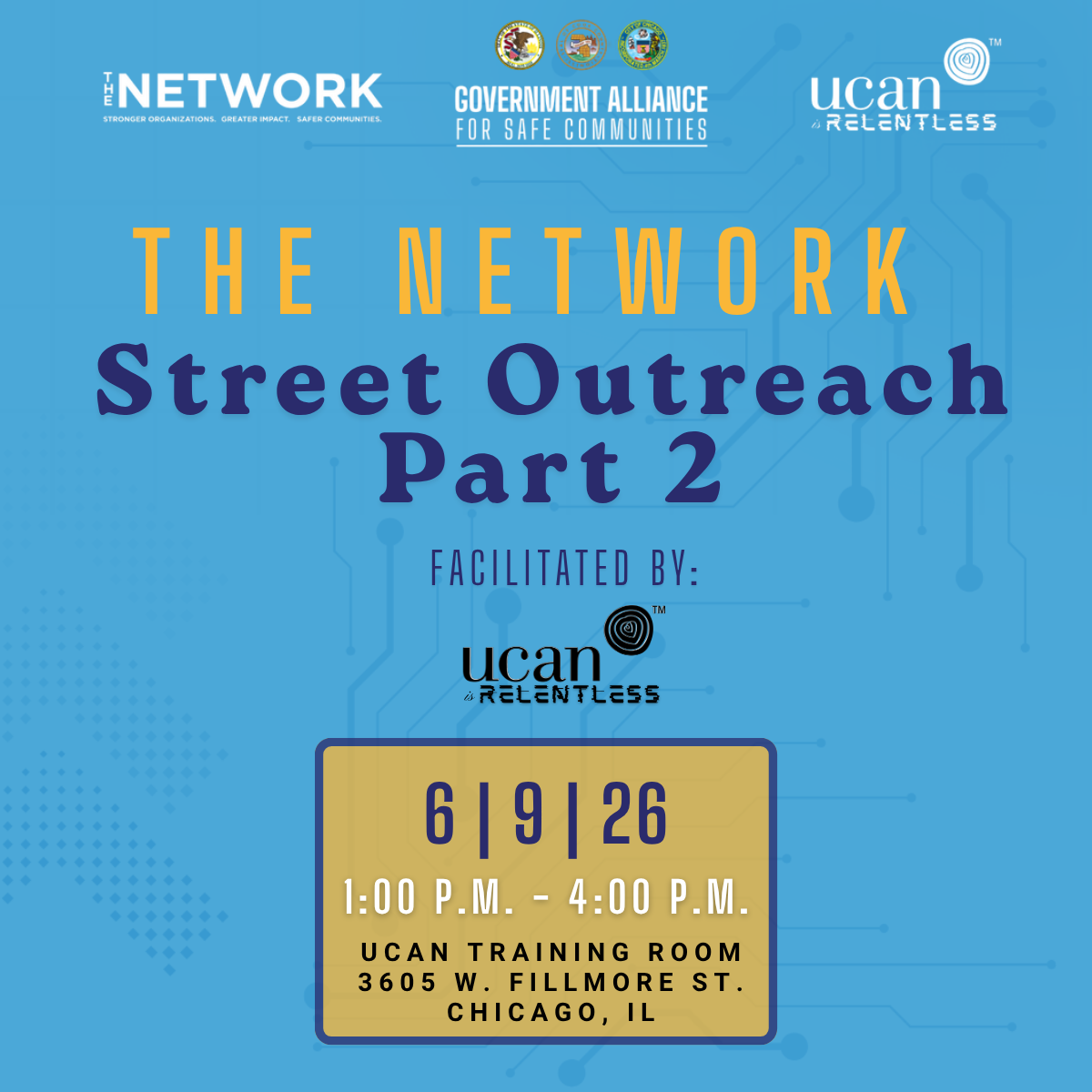
Street Outreach Part 2
Please join us for Street Outreach Part 2 - facilitated by UCAN.
-
Street Outreach Training: Part 2 builds on concepts introduced in the initial Street Outreach session and covers the remaining core content essential to effective community‑based violence intervention. This training focuses on applying a public health approach to gun violence, identifying high‑risk individuals and groups, responding to critical incidents, and using evidence‑based strategies to interrupt and prevent retaliation. Participants will deepen their understanding of street outreach roles, conflict mediation techniques, and real‑world outreach strategies grounded in lived experience, safety, and community trust.
-
- The public health approach to community violence intervention
- Using data and street‑level intelligence to define and monitor violence trends
- Identifying and engaging individuals and groups at highest risk
- Differentiating between high‑risk and high‑need participants
- Street outreach roles, responsibilities, and ethical boundaries
- Responding to critical incidents and assessing risk of retaliation
- Conflict mediation strategies, including de‑escalation and interruption techniques
- Building trust with participants, families, and the broader community
- Neighborhood‑level collaboration and partnership building
-
- Street Outreach Workers
- Violence Interrupters
- Case Managers working with high‑risk participants
- Victim Advocates involved in post‑incident response
- Outreach Supervisors or Program Managers
- CVI Program Directors
Note: Prior attendance at Street Outreach Training Part 1 is strongly encouraged, as this session builds directly on foundational concepts introduced in the first training.
Note that attendance is limited to 4 staff members per organization.
Prior attendance at Street Outreach Training Part 1 is strongly encouraged, as this session builds directly on foundational concepts introduced in the first training.
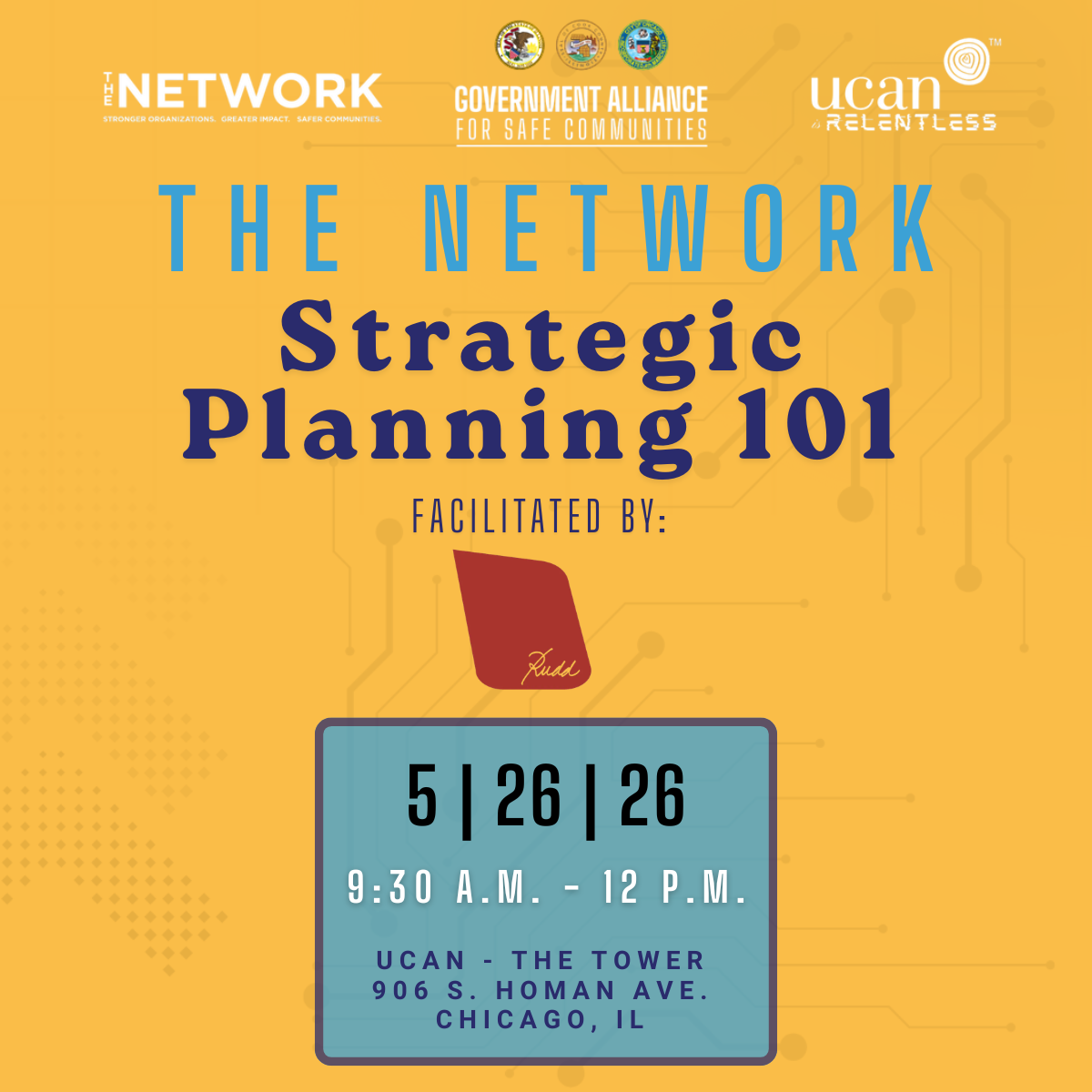
Strategic Planning 101
Please join us for Strategic Planning 101 - facilitated by Rudd Resources.
-
Strategic Planning 101 helps CBOs develop a clear, practical approach to setting organizational direction while navigating the realities of CVI work. This training focuses on aligning mission, programs, and resources; setting realistic priorities; and translating strategic plans into actionable steps. Participants will learn how to approach strategic planning as a living process that supports clarity, adaptability, and sustainability.
-
- What strategic planning is and what it is not
- Clarifying mission, vision, and values
- Assessing the organization’s current state
- Setting strategic priorities and realistic goals
- Moving from strategy to action and accountability
- Using strategic planning to support funding and growth
-
- Executive Directors / CEOs
- Senior Leadership Team Members
- Program Directors and Managers
- Operations or Administrative Leaders
- Board Members involved in planning or governance
Note that attendance is limited to 1 staff member per organization.
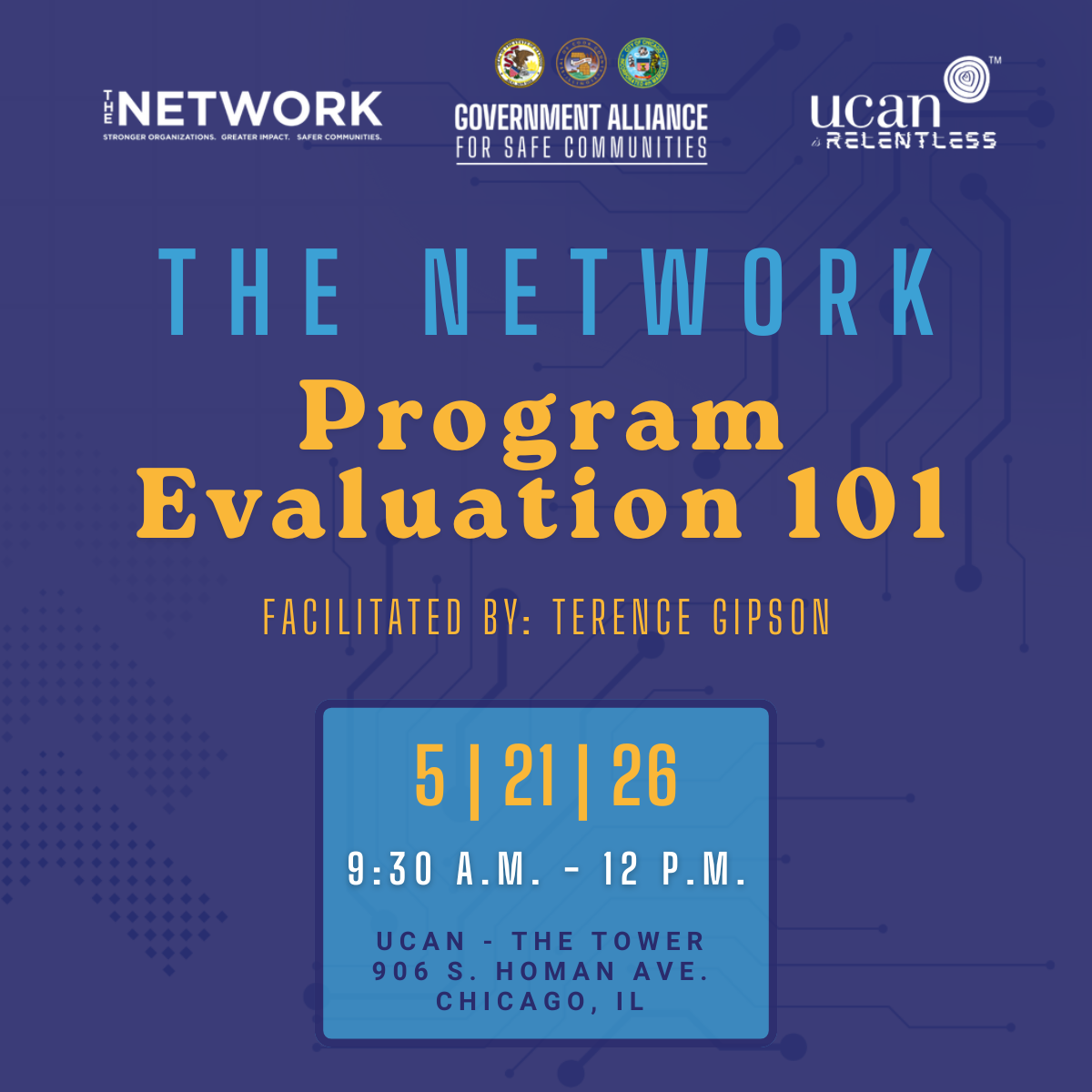
Program Evaluation 101
Please join us for Program Evaluation 101 - facilitated by Terence Gipson.
-
Program Evaluation 101 introduces CBOs to the foundational concepts of evaluating programs to support learning, improvement, and accountability. This training demystifies evaluation by focusing on practical, right‑sized approaches that organizations can realistically implement. Participants will explore how to define program goals, identify meaningful outcomes, collect relevant data, and use information to strengthen CVI programming.
The training emphasizes evaluation as a learning and improvement tool, not a punitive or compliance‑only exercise.
-
- Basics of program evaluation and common terminology
- Defining program goals, outcomes, and success
- Introduction to logic models or simple program frameworks
- What data to collect and why
- Using data for learning and program improvement
- Connecting evaluation to funding and sustainability
-
- Executive Directors / CEOs
- Finance Managers, Fiscal Officers, or Bookkeepers
- Program Directors and Program Managers
- Operations Managers
- Grants or Contracts Managers
- Board Members (Treasurers/Finance Committee members)
Note that attendance is limited to 1 staff member per organization.
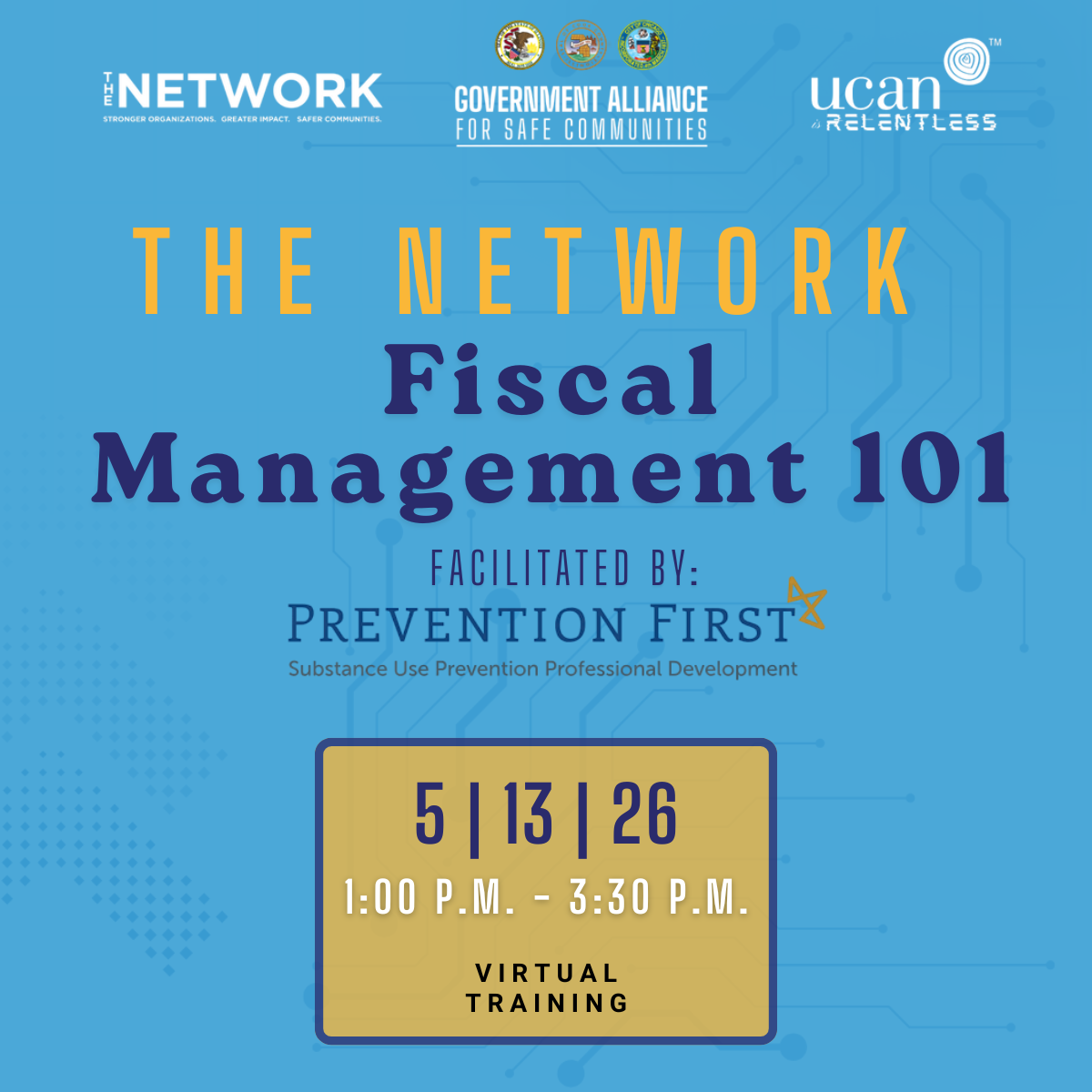
Fiscal Management 101
Please join us for Fiscal Management 101 - facilitated by Prevention First.
-
Fiscal Management 101 provides a practical introduction to managing organizational and program finances within Community‑Based Organizations (CBOs) operating in the CVI space. This training focuses on building shared understanding of fiscal responsibilities, budgeting basics, funding restrictions, and internal controls. Participants will learn how sound fiscal practices support program effectiveness, compliance, and long‑term sustainability.
-
- Overview of fiscal management fundamentals
- Understanding program‑level budgets
- Restricted vs. unrestricted funds
- Shared fiscal responsibilities across staff roles
- Basic financial controls and risk prevention
- Connection between fiscal practices, fundraising, and sustainability
-
- Executive Directors / CEOs
- Finance Managers, Fiscal Officers, or Bookkeepers
- Program Directors and Program Managers
- Operations Managers
- Grants or Contracts Managers
- Board Members (Treasurers/Finance Committee members)
Note that attendance is limited to 2 staff members per CBO.
This is a virtual training - once you have RSVP’d, be on the lookout for a calendar invite containing the meeting link.
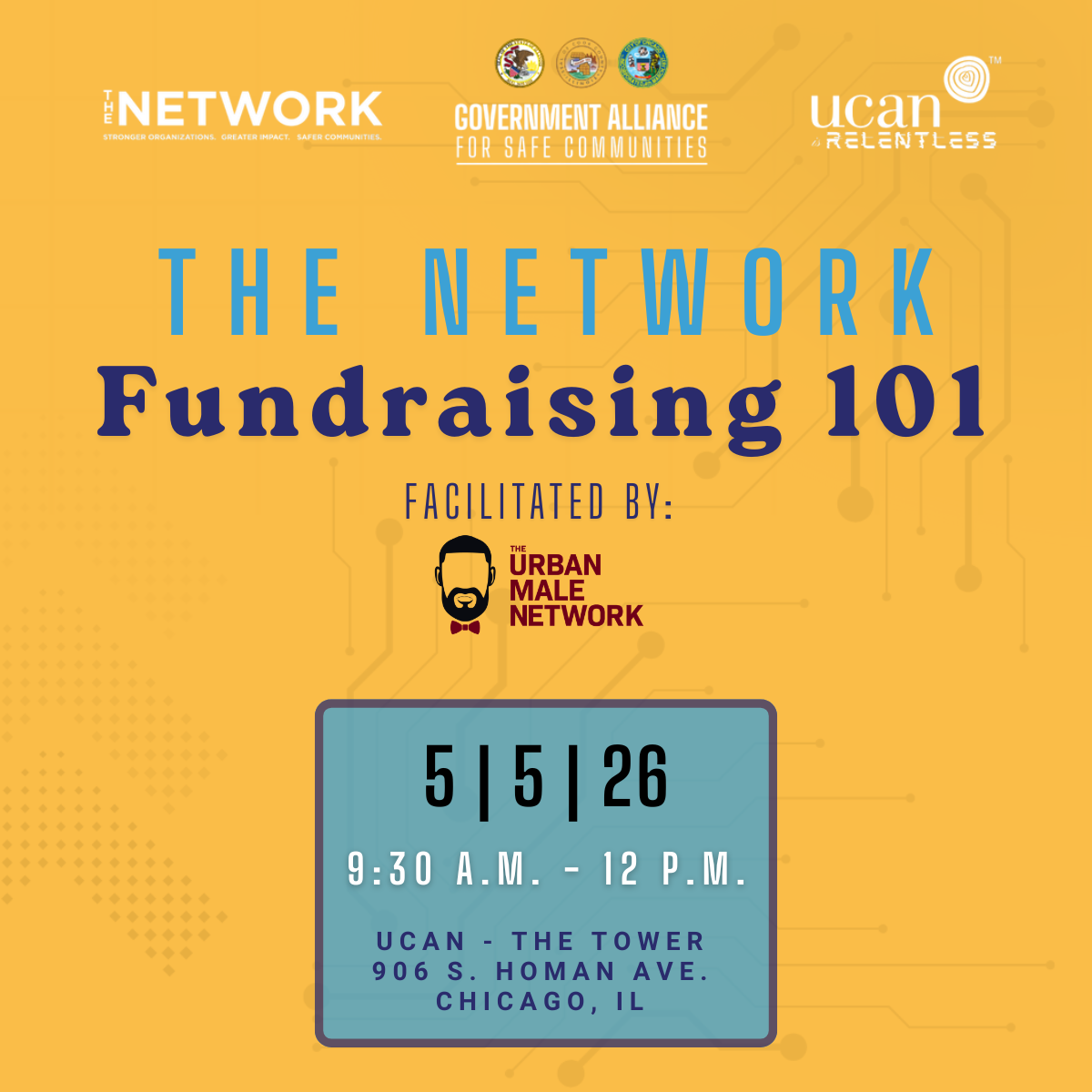
Fundraising 101
Please join us for Fundraising 101 - facilitated by The Urban Male Network.
Note that attendance is limited to 1 staff member per CBO.