THIS TRAINING IS CURRENTLY FULL.
Want to be the first to know when this training is offered again? Join the interest list below. We’ll save your information and notify you first when registration opens for the next training session.
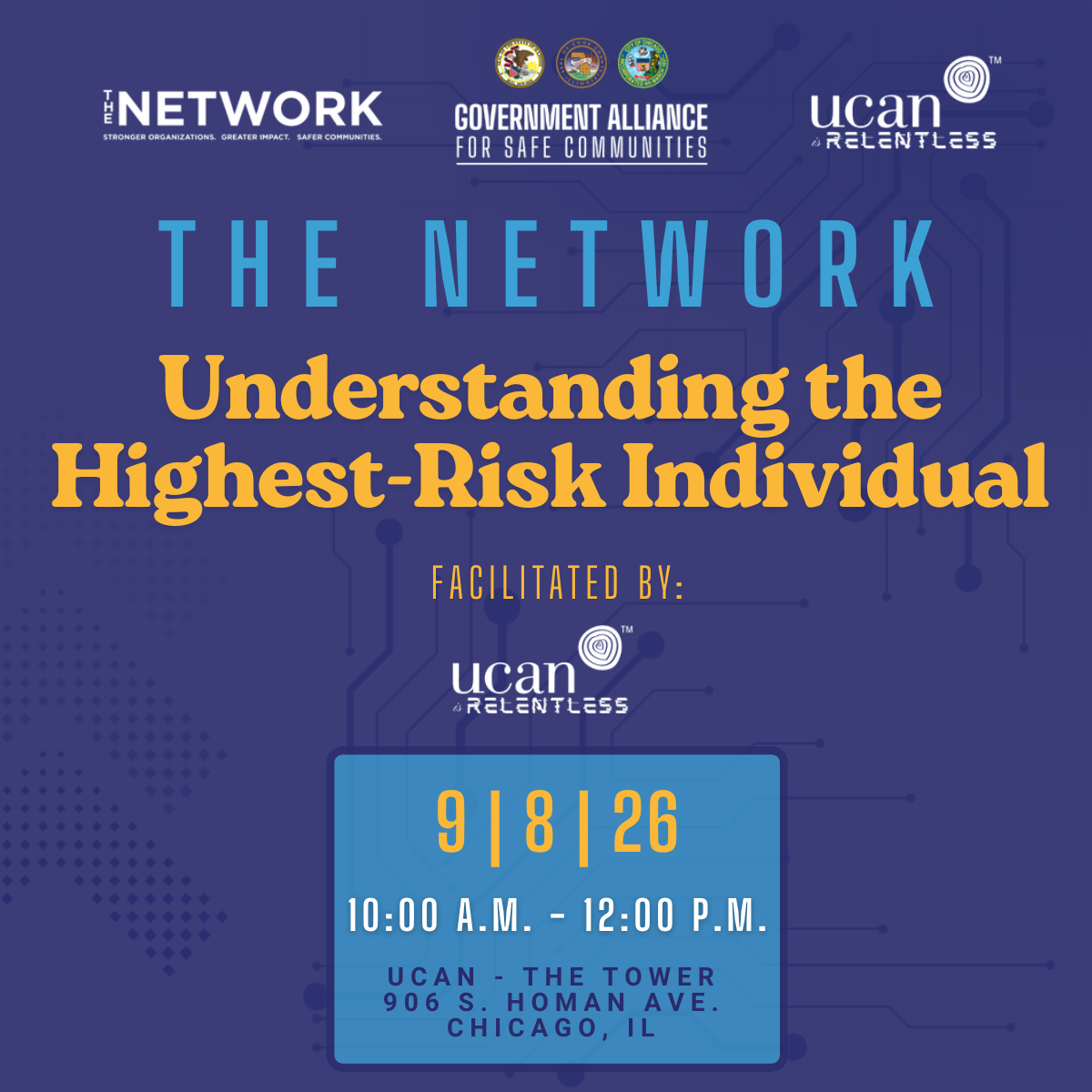
Please join us for Understanding the Highest-Risk Individual - facilitated by UCAN.
-
Understanding the Highest-Risk Individual explores the characteristics, circumstances, and factors that place certain individuals at the greatest risk of experiencing or perpetrating community violence. This training provides participants with a practical framework for identifying high-risk individuals, distinguishing between high-risk and high-need populations, and understanding how trauma, environment, and life experiences influence violence involvement.
Participants will learn strategies for building trust, strengthening engagement, and connecting individuals to appropriate interventions and supports. Grounded in Community Violence Intervention (CVI) best practices, this training emphasizes relationship-based, trauma-informed approaches that help organizations effectively serve those most impacted by violence.
-
- Exploring the factors that contribute to elevated risk for violence involvement
- Understanding the difference between high-risk and high-need individuals
- Examining the impact of trauma, victimization, and adverse life experiences
- Identifying common indicators associated with violence involvement
- Strengthening outreach, engagement, and relationship-building strategies
- Understanding how to connect participants to appropriate services, resources, and support systems
- Applying evidence-informed and relationship-based practices to CVI work
-
- Street Outreach Workers
- Violence Interrupters
- Case Managers
- Victim Advocates
- Program Managers/Supervisors
- Reentry Staff
- Program Directors
- Behavioral Health Staff
- Hospital-Based Violence Intervention Staff
Note: This training is recommended for staff who work directly with individuals impacted by community violence and those responsible for participant engagement, intervention planning, outreach, case management, mentoring, and violence prevention services. Participants will gain a deeper understanding of the complex factors that place individuals at elevated risk of violence involvement and learn practical strategies for building trust, assessing needs, and connecting participants to meaningful supports and opportunities.
Note that attendance is limited to 2 staff members per organization.
This training is recommended for staff who work directly with individuals impacted by community violence and those responsible for participant engagement, intervention planning, outreach, case management, mentoring, and violence prevention services. Participants will gain a deeper understanding of the complex factors that place individuals at elevated risk of violence involvement and learn practical strategies for building trust, assessing needs, and connecting participants to meaningful supports and opportunities.