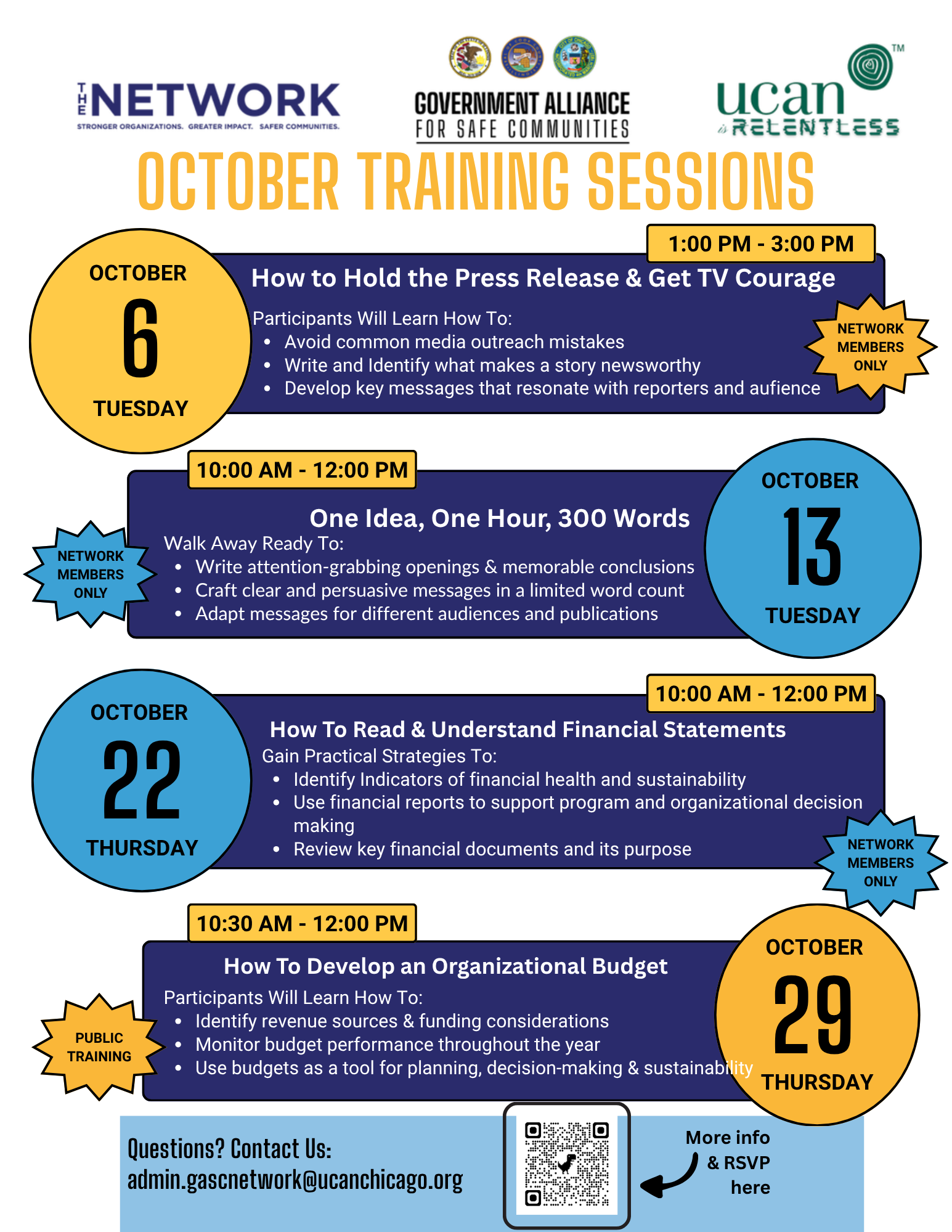
Upcoming Public Events
Welcome to The Network Public Training Calendar!
This calendar features trainings that are open to the public and available to nonprofit organizations, community-based organizations (CBOs), and other community partners interested in strengthening their capacity.
Browse upcoming sessions, review the training descriptions and recommended audience, and register for the opportunities that best fit your organization's goals. Registration is required, and space may be limited for some trainings.
We look forward to learning with you!

How to Develop an Organizational Budget
Please join us for How to Develop an Organizational Budget facilitated by - Amy Kaufman
-
Developing an Organizational Budget focuses on creating and managing budgets that support organizational goals, program effectiveness, and long-term sustainability. Participants will learn the key components of budget development, including projecting revenues and expenses, aligning resources with strategic priorities, and planning for organizational growth. This training will provide practical tools and best practices to help Community Violence Intervention (CVI) organizations build realistic and effective budgets that support both daily operations and future planning.
-
- Understanding the purpose and value of organizational budgeting
- Aligning budgets with organizational goals and priorities
- Identifying revenue sources and funding considerations
- Forecasting program and operational expenses
- Building annual and project-based budgets
- Allocating resources across programs and departments
- Understanding direct and indirect costs
- Monitoring budget performance throughout the year
- Adjusting budgets in response to organizational changes
- Using budgets as a tool for planning, decision-making, and sustainability
-
- Executive Directors
- Program Directors
- Program Managers
- Finance and Accounting Staff
- Operations Managers
- Grants Managers
- Development and Fundraising Staff
- Administrative Staff responsible for financial planning
This is a virtual training - once you have RSVP’d, be on the lookout for a calendar invite containing the meeting link.
This training is recommended for staff responsible for developing, managing, monitoring, or approving organizational budgets and for those seeking to strengthen financial planning practices that support effective Community Violence Intervention programming and long-term organizational sustainability.
What is Individual Giving and Donor Development
Please join us for What is Individual Giving and Donor Development facilitated by - Conlon Public Strategies
-
What Is Individual Giving & Donor Development introduces Community-Based Organizations (CBOs) to the fundamentals of building and sustaining support from individual donors. Participants will learn how individual giving can strengthen organizational sustainability, diversify revenue streams, and create a network of supporters invested in the organization's mission. Designed for organizations operating in the Community Violence Intervention (CVI) space, this training explores practical strategies for identifying prospective donors, building donor pipelines, engaging supporters, strengthening stewardship practices, and developing long-term relationships that encourage ongoing investment in violence prevention and community safety efforts. Attendees will leave with a greater understanding of how donor development supports both fundraising success and long-term organizational growth.
-
Understanding the role of individual giving within nonprofit fundraising
Exploring how individual donors contribute to organizational sustainability
Understanding the donor development lifecycle and relationship-building process
Building a donor pipeline and identifying prospective supporters
Leveraging existing networks, stakeholders, volunteers, and community partners
Creating donor engagement strategies that build trust and connectionUnderstanding ethical considerations when sharing participant and community stories
Strengthening donor stewardship through appreciation and ongoing communication
Building donor loyalty and increasing donor retention
Developing systems and processes that support sustainable individual giving programs
-
Executive Directors
Chief Executive Officers (CEOs)
Program Directors
Program Managers
Finance and Accounting Staff
Grants Writers and Grants Managers
Development and Fundraising Staff
Administrative Staff involved in budgeting, reporting, or grant administration
This is a virtual training - once you have RSVP’d, be on the lookout for a calendar invite containing the meeting link.
This training is recommended for staff responsible for overseeing finances, managing grants, reviewing organizational performance, making budget decisions, or supporting the financial sustainability of Community Violence Intervention programs.
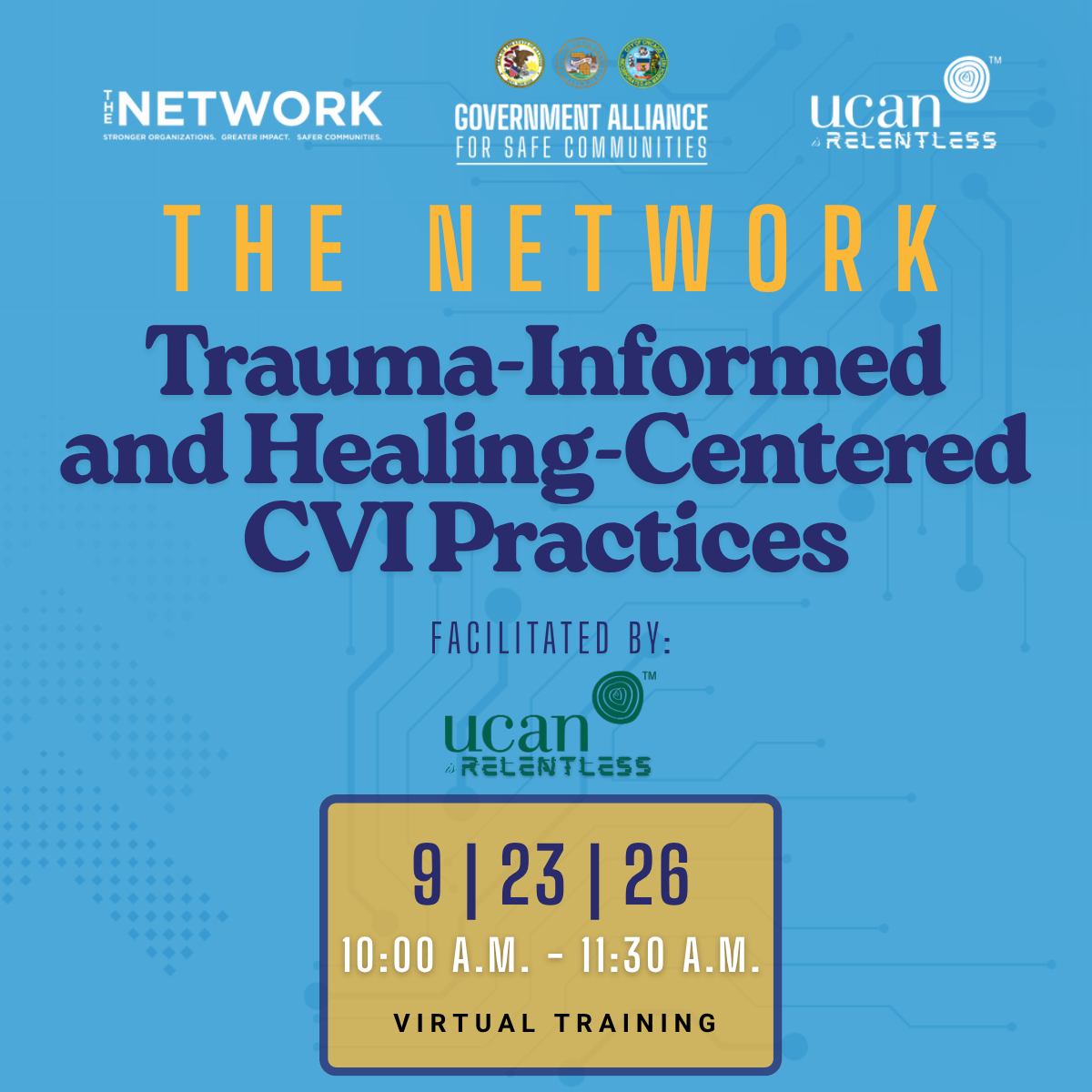
Trauma-Informed and Healing-Centered CVI Practices
Please join us for Trauma-Informed and Healing-Centered CVI Practices - facilitated by UCAN.
-
Trauma-Informed and Healing-Centered CVI Practice explores how trauma influences individuals, communities, and violence prevention efforts, while providing practical strategies for promoting healing, resilience, and recovery. This training helps participants understand the lasting impact of violence and trauma and introduces approaches that support healthier engagement with participants, families, and communities. Participants will learn how to apply trauma-informed principles, recognize the effects of secondary and vicarious trauma, and contribute to creating organizations that support both participant healing and staff well-being. Grounded in Community Violence Intervention (CVI) best practices, this training emphasizes strengths-based engagement, resilience, and long-term community wellness.
-
- Understanding trauma and its impact on violence and community outcomes
- Examining the relationship between trauma exposure and violence involvement
- Learning the principles of trauma-informed practice
- Exploring healing-centered engagement and strengths-based approaches
- Recognizing signs of secondary trauma and vicarious trauma
- Examining burnout and compassion fatigue among frontline staff
- Strengthening wellness, self-awareness, and reflective practice
- Building healthy boundaries and sustainable helping practices
- Exploring leadership's role in supporting staff well-being
- Understanding what makes an organization trauma-responsive
- Applying trauma-informed principles to Community Violence Intervention programs and services
-
- Street Outreach Workers
- Violence Interrupters
- Case Managers
- Victim Advocates
- Promgram Managers/Supervisors
- Reentry Staff
- Program Directors
- Behavioral Health Staff
- Hospital-Based Violence Intervention Staff
Note: This training is recommended for staff who work directly with individuals impacted by violence and those responsible for supporting frontline practitioners. Participants will gain practical strategies for understanding trauma, promoting healing, supporting staff wellness, and building trauma-responsive organizations that foster long-term success for both participants and employees.
Note: This is a virtual training - once you have RSVP’d, be on the lookout for a calendar invite containing the meeting link.
This training is recommended for staff who work directly with individuals impacted by violence and those responsible for supporting frontline practitioners. Participants will gain practical strategies for understanding trauma, promoting healing, supporting staff wellness, and building trauma-responsive organizations that foster long-term success for both participants and employees.
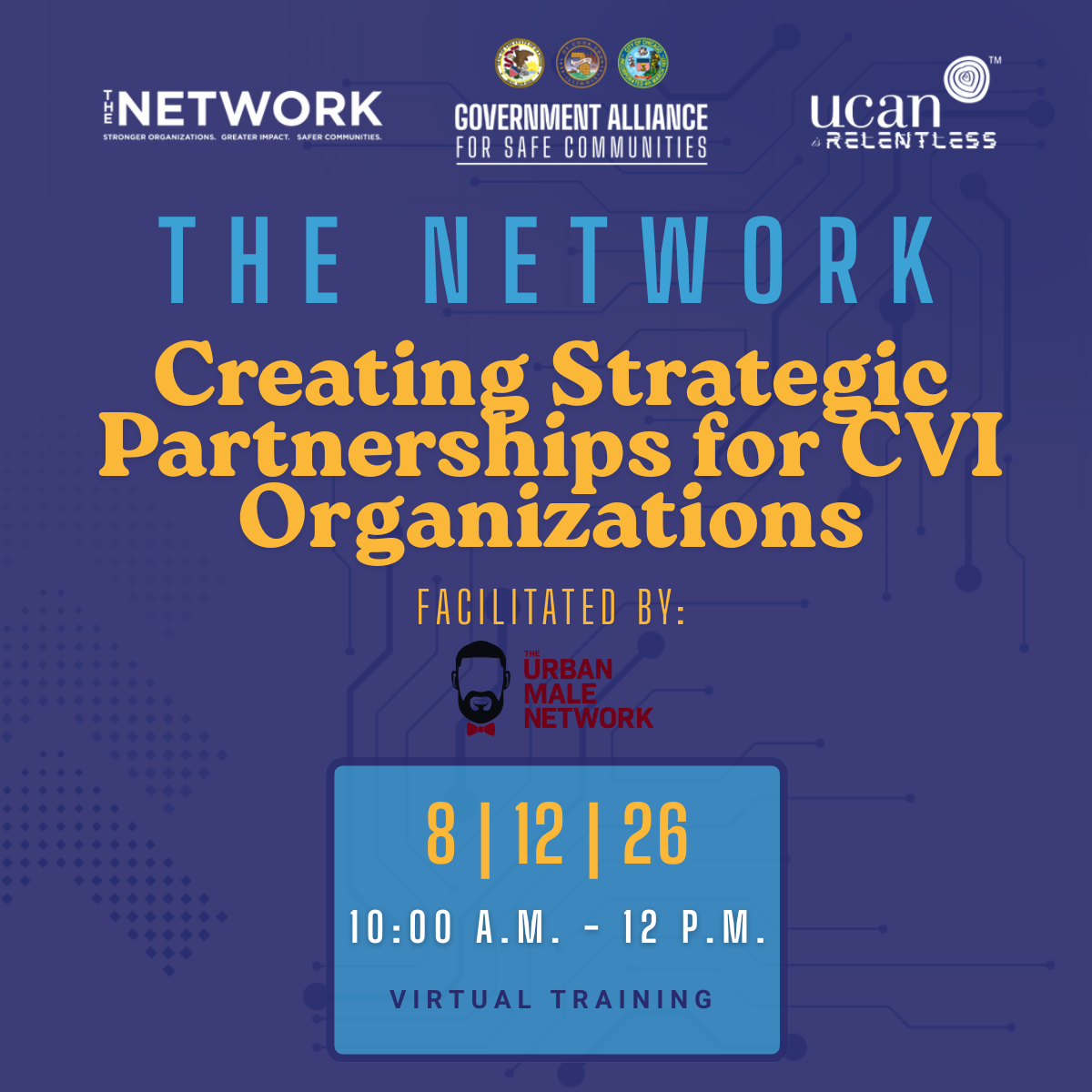
Creating Strategic Partnerships for CVI Organizations
Please join us for Creating Strategic Partnerships for CVI Organizations - facilitated by The Urban Male Network.
-
Partnership Development in the CVI Space focuses on building and strengthening the relationships necessary to support effective community violence intervention efforts. Strong partnerships help organizations expand their reach, improve service coordination, leverage resources, and create more comprehensive support systems for individuals and communities impacted by violence. This training explores strategies for identifying, developing, and sustaining meaningful partnerships with community organizations, government agencies, schools, healthcare providers, funders, and other key stakeholders. Participants will learn how to cultivate collaborative relationships that advance organizational goals and strengthen community impact.
-
- Understanding the role of partnerships in Community Violence Intervention
- Identifying potential partners that align with organizational goals and community needs
- Building trust and credibility with community stakeholders
- Developing mutually beneficial partnerships and collaborations
- Effective communication and relationship-building strategies
- Creating partnership agreements, roles, and shared expectations
- Leveraging partnerships to increase resources, referrals, and service delivery
- Coordinating services across organizations to improve participant outcomes
- Navigating challenges and conflict within partnerships
- Measuring and sustaining successful partnerships over time
-
- Executive Directors
- Chief Executive Officers (CEOs)
- Program Directors
- Community Violence Intervention Managers
- Outreach Supervisors
- Community Engagement Coordinators and Managers
- Partnership and Collaboration Leads
- Resource Navigators
- Development and Fundraising Staff
- Board Members
Note: This training is recommended for staff responsible for building external relationships, coordinating services, expanding community partnerships, securing resources, or strengthening collaborative efforts that support violence prevention and intervention initiatives.
Note: This is a virtual training - once you have RSVP’d, be on the lookout for a calendar invite containing the meeting link.
This training is recommended for staff responsible for building external relationships, coordinating services, expanding community partnerships, securing resources, or strengthening collaborative efforts that support violence prevention and intervention initiatives.